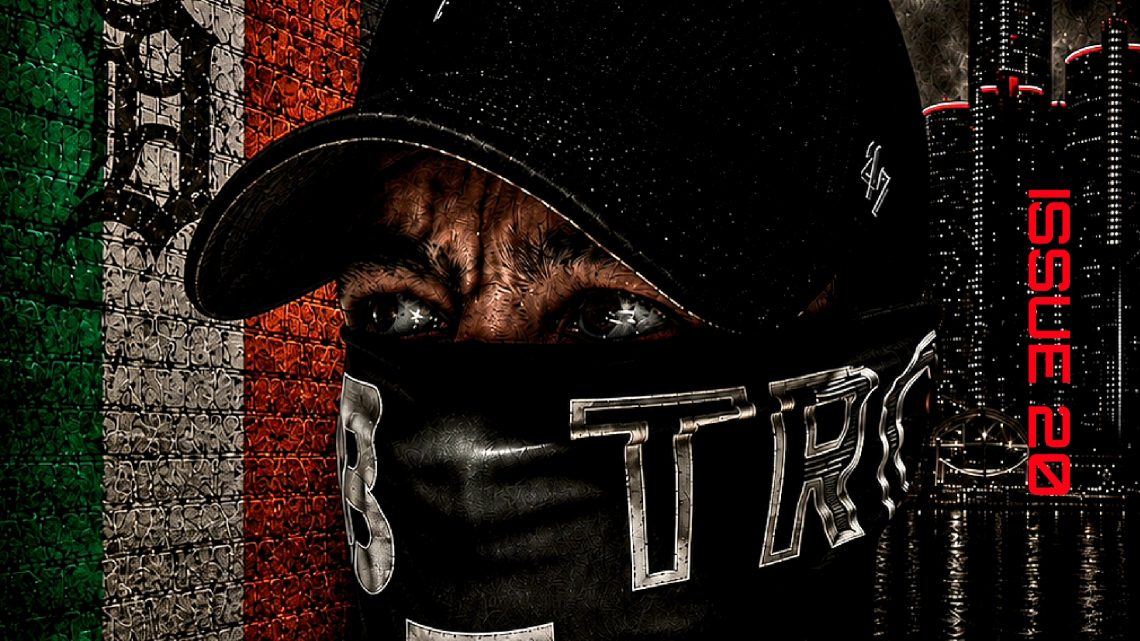
REOSC: Dublin’s Techno Pioneer on Raves, Decks, and Breaking Detroit Part 1
May 17, 2026Interview Editing Design Mike Moggi Mannix
Part 1 of a 2 part indepth Interview
The savage underground live vinyl mix REOSC submitted to 313FM Detroit 2022
Emerging from Dublin’s underground rave scene, REOSC has established himself as a fearless innovator in techno. Known for his dynamic live performances and technical expertise.
From the awe-inspiring raves at the Temple Theatre to witnessing Billy Nasty’s electrifying performance at Homelands Festival, these early experiences lit the spark for what would evolve into a ground-breaking career defined by experimentation, resilience, and an unrelenting passion for electronic music.
In this in-depth conversation with IUMs Mike Mannix, REOSC retraces his path from his formative years, reflecting on the milestones, mentors, and moments that shaped his artistry. From childhood memories of his mother’s influence as a violinist who ignited his passion for piano that ultimately led him to the Royal Irish Academy of Music, where he underwent formal musical training. These early experiences laid the foundation for his keen ear and eventual evolution as a producer and DJ.
REOSC’s story is as much about community as it is about music. His dedication to honouring the roots of techno, pushing creative boundaries, and building genuine connections between Dublin and the Motor City reflects a journey grounded in authenticity, passion, and innovation. In less than three years, that journey has seen REOSC fully embraced by Detroit’s underground techno community — not as an outsider looking in, but as a Detroiter accepted into the raw heartbeat and culture of the city itself.
In many ways, Detroit’s gain has quietly become Dublin’s loss..
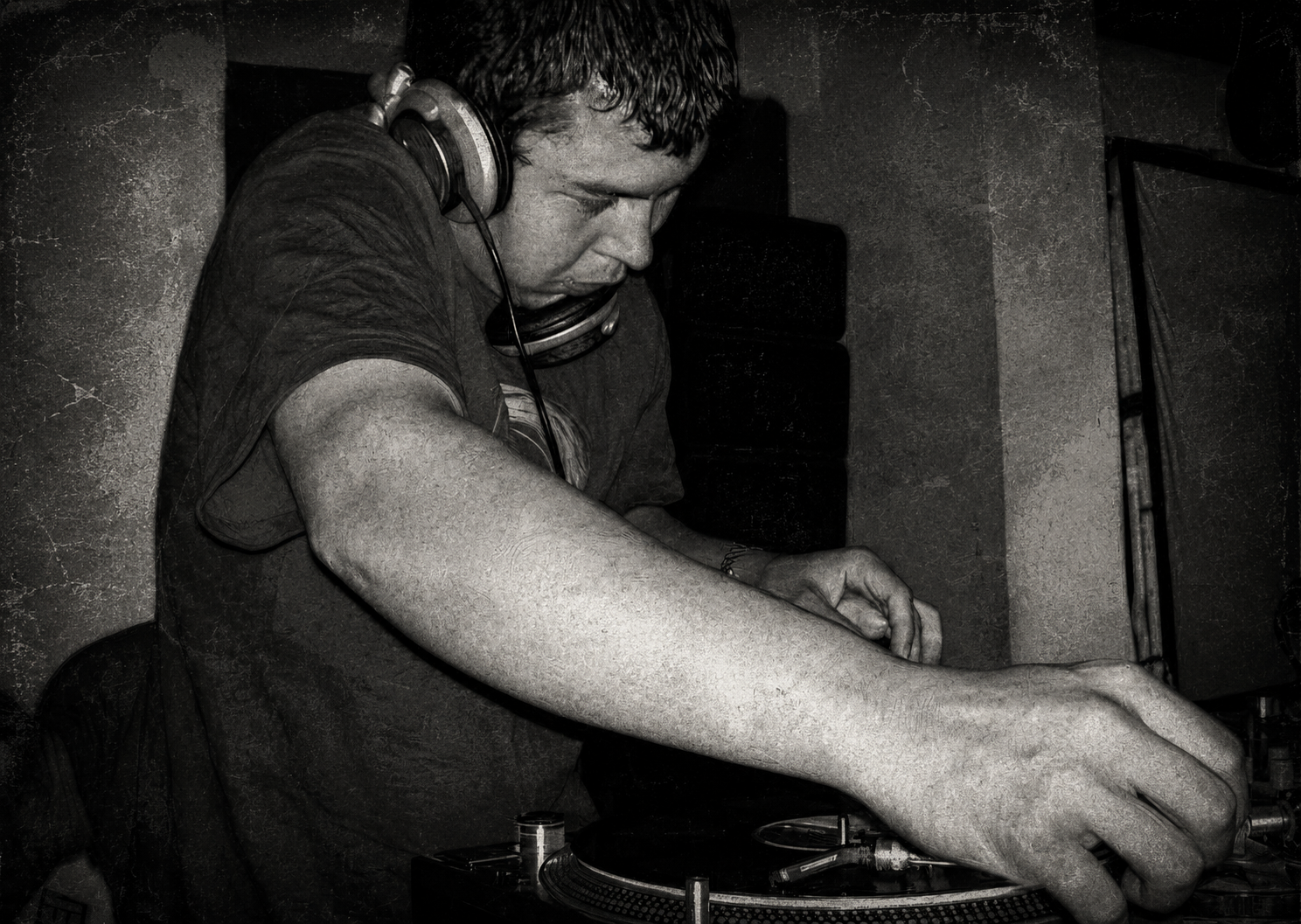
REOSC early 2000
REOSC Dublin early daysThe Early Years: A Musical Foundation
REOSC’s relationship with music began at home. Growing up, he was surrounded by the sounds of his mother’s violin and the encouragement of a family that valued creativity. His first connection to music came through a vinyl record of Bobby McFerrin’s Don’t Worry, Be Happy—a lighthearted anthem that, in retrospect, marked the start of a lifelong journey.
REOSC: My mum was a violinist, and her love for music had a big influence on me. She encouraged me to learn the piano, which eventually led to formal training at the Royal Irish Academy of Music.
Those years gave me a foundation in structure and discipline, but they also nurtured my ear for melody and rhythm.
The Spark: Discovering Techno at Homelands
Mike Mannix: So when did the spark for techno come man?
REOSC: The rave scene! I was going out partying, having fun. The Temple Theatre was the place for trance back then. One night, my mate Drudy told me, ‘Whatever you do, meet me at 8pm outside the Influx Tent at Homelands.’
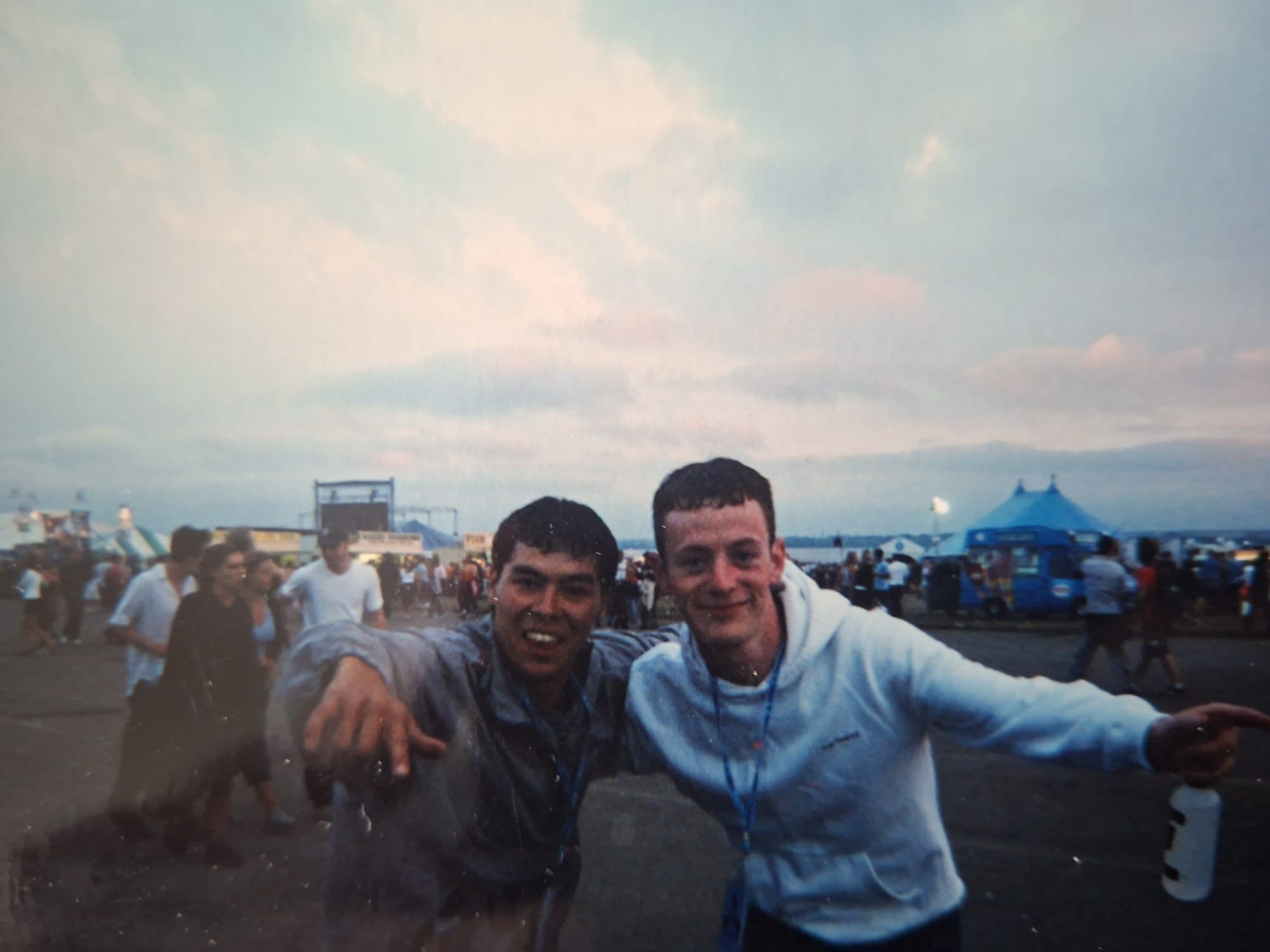
REOSC & Drudy
I didn’t even know what we were going to see. He said, ‘There’s no breakdown. It’s just mad.’ When we walked in, it was Billy Nasty. That was my introduction to techno.
His set was non-stop rolling, drilling beats—no breakdowns, just pure energy. I still get shivers thinking about it.
That was the first Homelands Festival, around ’98 or ’99. Watching him, I realized this was a completely different world of music. The transitions were so intricate. I didn’t even know what EQs were at the time, but I could tell this was something special. That’s when I started listening more and diving into mixing myself.
Learning the Craft: From Inspiration to Execution
Mike Mannix: How did you go from being inspired to actually becoming a DJ?
REOSC: Drudy was already a DJ and showed me how to mix Technasia with Marco Lanzi’s Audio 20. That was my starting point. I thought, ‘I need to get my own decks.’ I saved up and bought some Sony Direct Drives and began collecting records at Spindizzy.
At first, I didn’t know what I liked, so the lads at Spindizzy told me to come back with a list. When I did, they handed me a bag of records and said, ‘These are for you.’ That’s how it started. From there, I got better decks and learned to pitch properly.
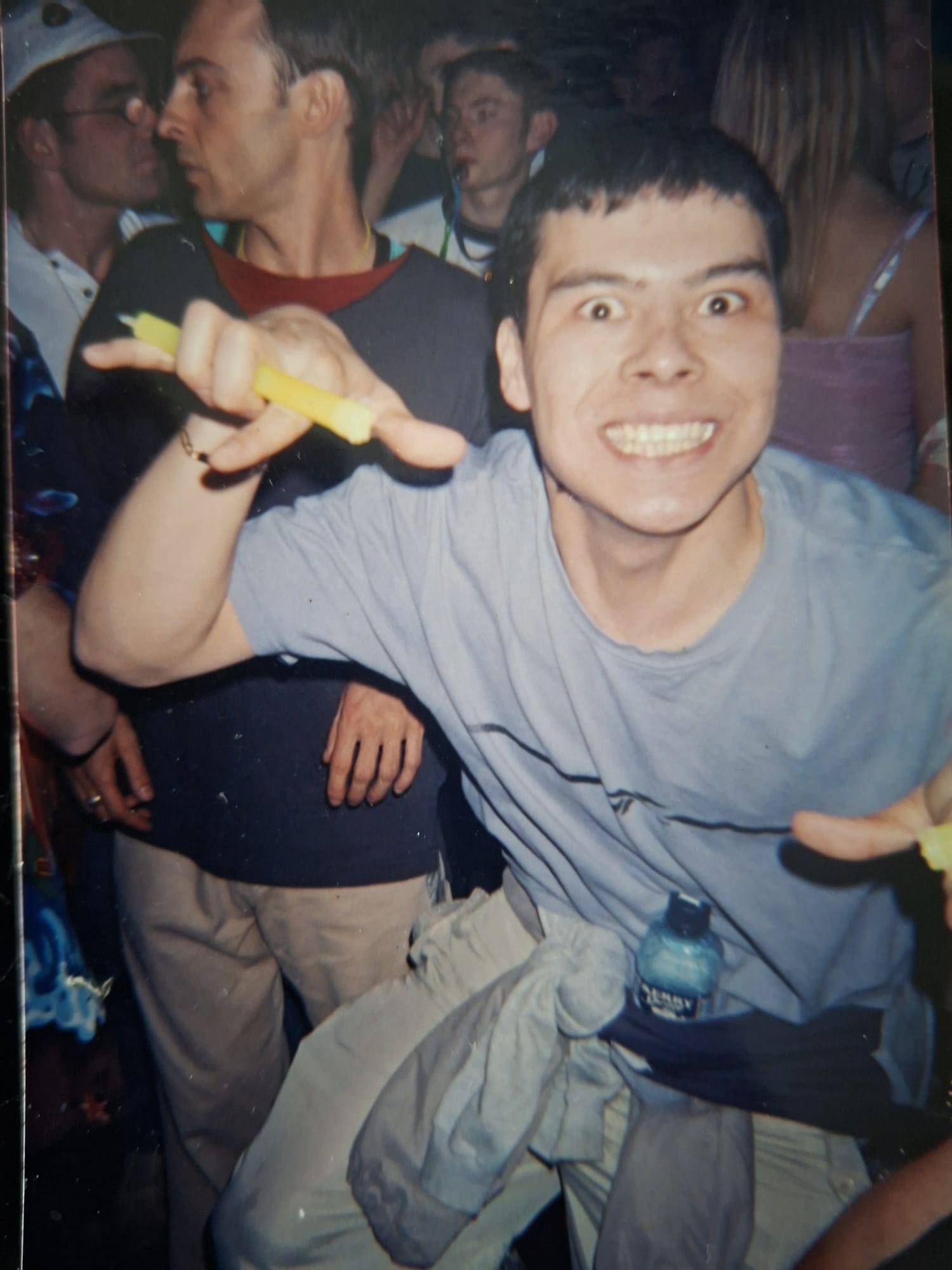
REOSC
I saw local DJs playing with two decks, but when international acts like Gaetano Parisio and Joey Beltram came, they were using three decks. That blew my mind. I got a third turntable and became one of the first Irish techno DJs to bring three-deck mixing into our scene. People started noticing me after that.
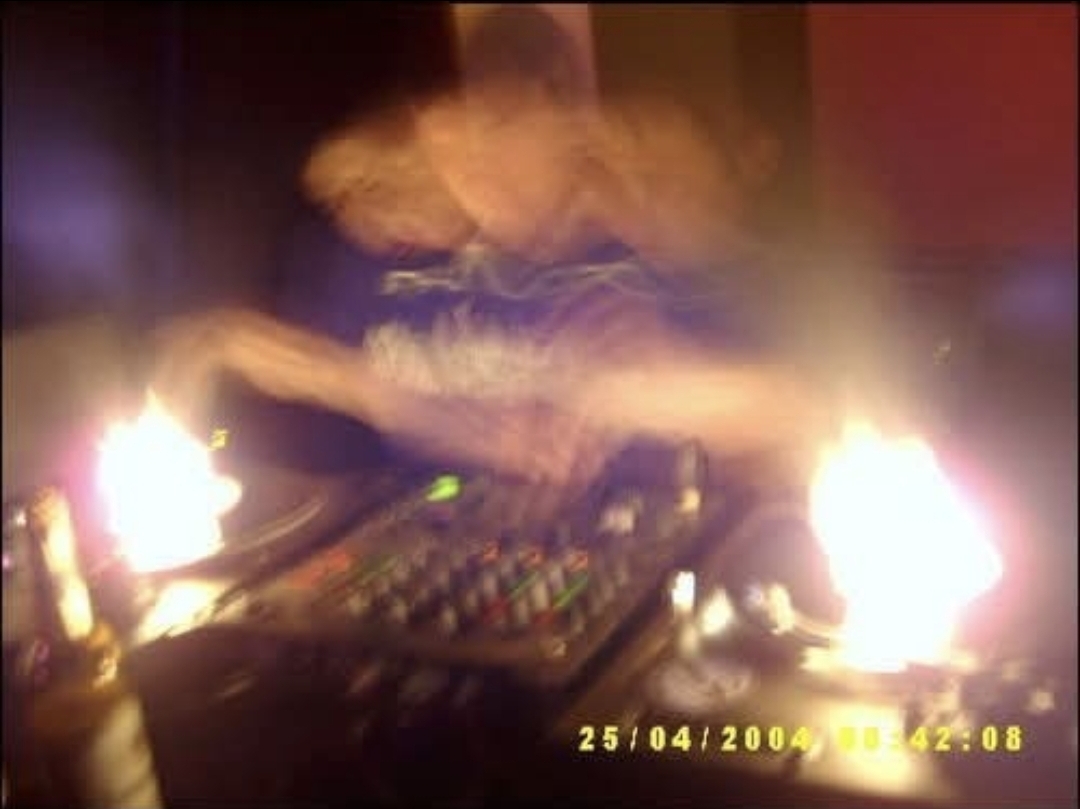
REOSC decks on fire
Breaking Boundaries: The Fire-Lit Vinyl Era
Mike Mannix: You’ve been known for some wild performances. Tell me about your fire-lit vinyl tricks.
REOSC: I’ve always loved hip-hop turntablism, so I wanted to bring that energy into techno. I started with two of the same techno records and practiced scratching behind my back or under my leg. Then I thought, ‘What’s next?’
I made these steel plates with cigarette butts tied into them, stuck them on vinyl, and poured Zippo fuel over the top. During gigs, I’d light them up while scratching.
The crowd thought I was setting my wax on fire!”
It was all about pushing boundaries and giving people something to remember. You couldn’t get away with that today, but back then, it was pure fun.
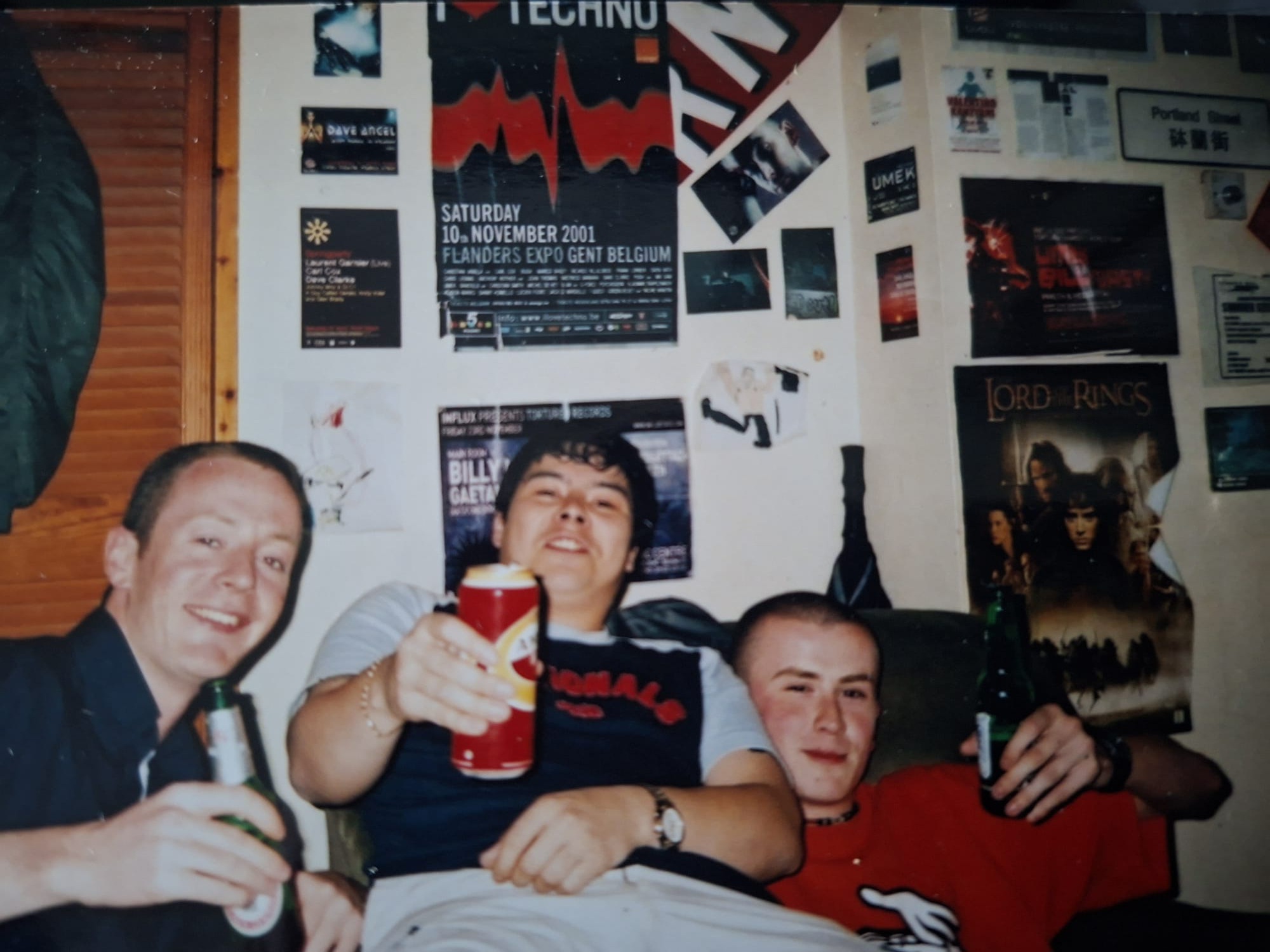
Fusion Ink: Building a Legacy in Dublin
Mike Mannix: You were also involved in running nights like Fusion Inc. How did that come about?
REOSC: It started with Chris O’Driscoll, who was running nights on Nassau Street. We had brought over DJs like Gaetano Parisio, Jel Ford, and Oliver Ho. These were the DJs and producers pushing boundaries globally, and we wanted to bring that energy to Dublin. One of my favorite memories was booking Oscar Mulero. At the time, he wasn’t well-known in Ireland, but Drudy insisted we bring him over. It turned out to be one of our best gigs.
Mike Mannix: Was it hard to make these nights profitable?
REOSC: We definitely had to hustle. There were times we dipped into our own wages to cover costs, but we didn’t care. It was all about the music. One of our tougher nights was with Ignition Technician. We put so much into promoting it, but there were too many events that weekend.
“After that, we decided to do one last big gig. We booked Oscar Mulero, and it was packed out. That was a win-win for us. Fusion Ink officially ended in 2005, but the memories and impact are still alive today.“
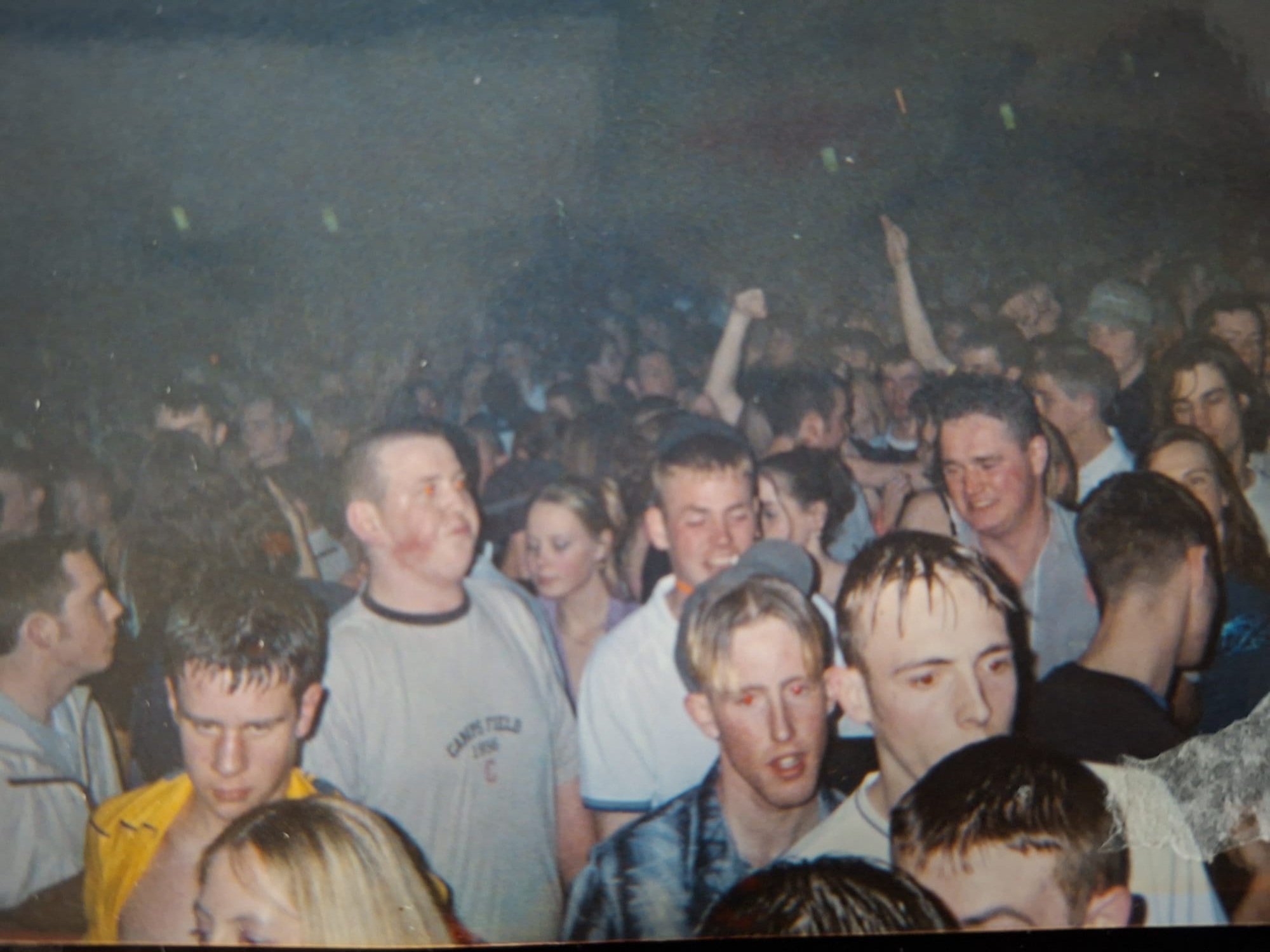
Exploring Minimal Techno and Hip-Hop: A Versatile Approach
Mike Mannix: Did you stick exclusively to techno, or did you incorporate other genres?
REOSC: Techno has always been my foundation, but I’ve dabbled in hip-hop. Back in 2005, when techno was becoming more minimal, I started collecting hip-hop records.
“My friend Nelo, who lived down the road, was into drum & bass and hip-hop, so we’d experiment together. I tried blending hip-hop turntablism with techno—scratching, using two of the same record, and even behind-the-back tricks. It added a unique flair to my sets.“
Vinyl and Tangibility: Holding the Music
Mike Mannix: You’ve mentioned your preference for vinyl over digital formats. Can you expand on that?
REOSC: The main focus is on putting out quality music on a tangible asset like vinyl because music just gets lost when it’s MP3.
I can’t deal with hard drives full of files. It doesn’t give me any feeling or love. I can’t love the song as much if I can’t hold it.
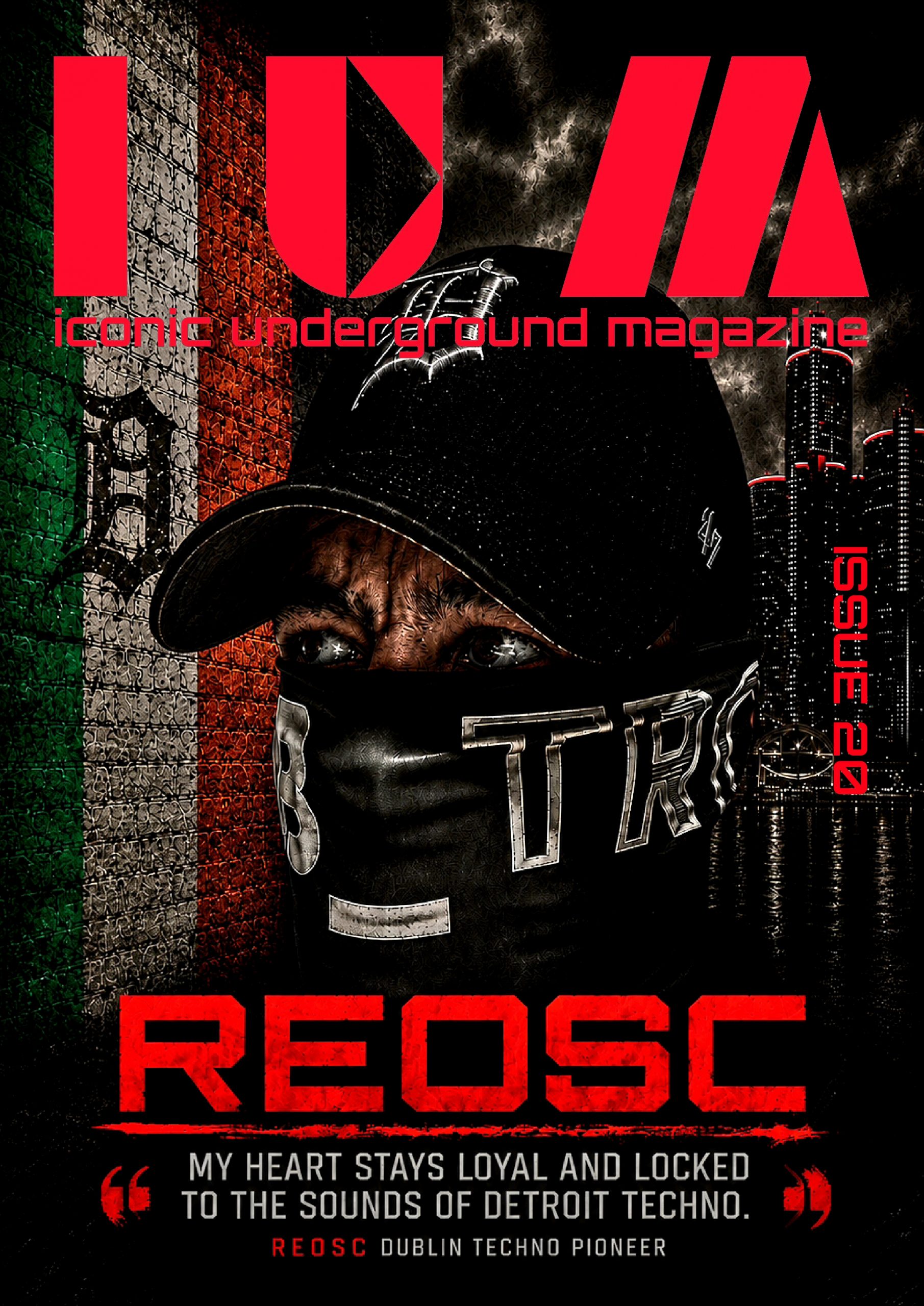
IUM Issue 20 – REOSC Front Cover
Tec-Troit: Embracing Techno’s Roots and Pushing Boundaries Experiencing Detroit’s Soul
After releasing an album and two EPs in Dublin — only to find himself largely overlooked within his own city — REOSC turned his focus toward Detroit, the birthplace of the music that had shaped him. Determined to connect with the culture at its source, he reached out to influential figures such as Brent and Detroit legend Jeffrey “The Don” Woodward of 313.FM.
That persistence soon paid off when DJ Roach — respected Underground Resistance [UR] affiliate and key figure within Detroit’s underground scene — invited REOSC to perform at the Tec-Troit afterparties. What followed became a pivotal turning point in his Detroit journey.
Since then, REOSC has returned to the city year after year — and now multiple times each year — where he has not only built an audience for his hard-cut, vinyl-driven style of techno, but also formed genuine connections with a community fiercely committed to preserving the true spirit and legacy of the culture.
More importantly, Detroit’s underground scene embraced him as one of their own. He hadn’t simply discovered his tribe — Detroit made him part of theirs.
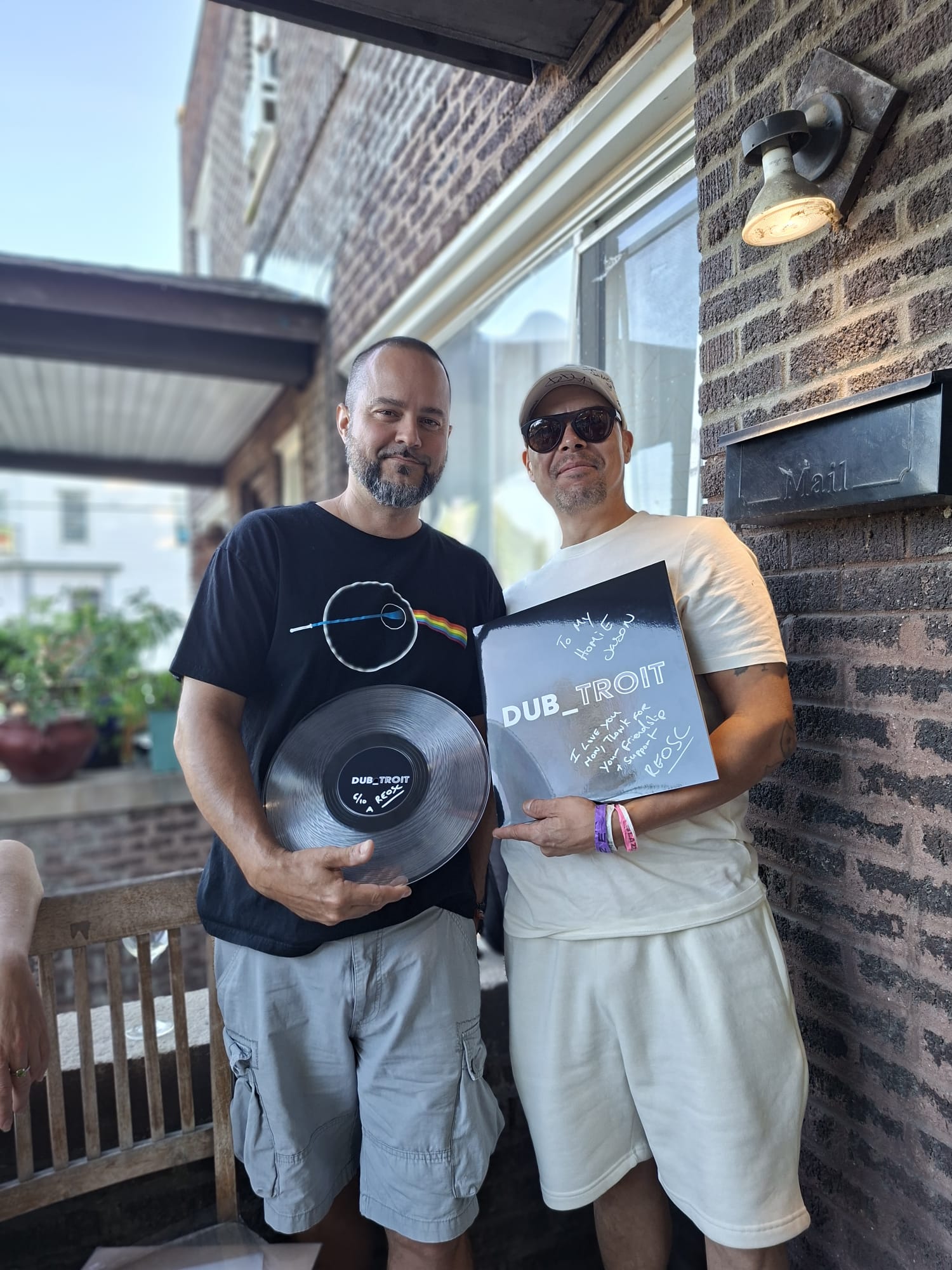
Jason Garcia DTM & REOSC Detroit
Mike Mannix: What first inspired you to pursue this path to Detroit?
REOSC: I just kept going man, kept DJing, kept putting out mixes, then Elaine [my wife]found a couple of music production courses online and I looked at one. One had a label affiliated with it.
So, I went for that one and did the course, released my debut album which got to No.3 in the Beatport Techno charts and then two EPs with that thereafter. And then
I moved on then to seek Detroit because that’s where I knew my sound was going. That’s what I’ve always listened to in my younger years as techno, Underground Resistance, Rolando, Los Hermanos, all those guys, Claude Young.”
That’s where I felt I needed to be as opposed to going where everyone else normally goes to, maybe the UK or the Netherlands or Berlin. It was Detroit for me.
‘’To be the best at a music that you want to study, you’ve got to first learn the grassroots by going where it was first made’’
Now, there is this hype about Berlin people saying techno was made in Berlin, but that’s the electro side, which was taken from Berlin’s Kraftwerk. That was an influence to Detroit OG legend Juan Atkins. I think you interviewed that guy in one of your main editions.
Mike Mannix: Yeah man, he was front cover issue 14.
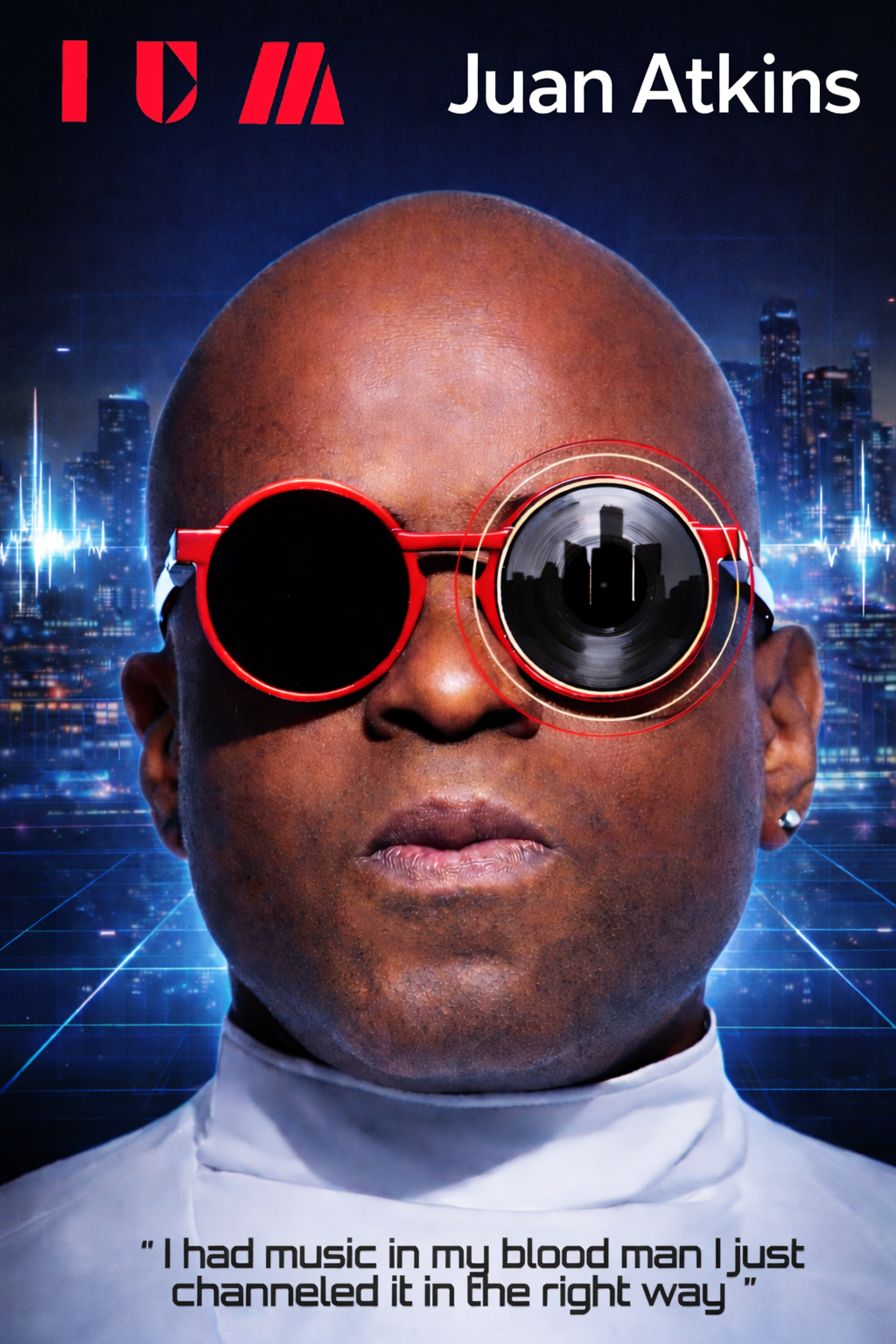
Juan Atkins IUM Issue 14
REOSC: He was, yeah. That’s fantastic. But Juan Atkins, he’s grassroots, he used to listen to Kraftwerk. Kraftwerk didn’t have 909s and all those other machines back then. They weren’t that hard sound. He created that 80s electro-y, techno-y sound. You know, you can talk about Juan, but then
you can’t forget about, all the other Detroit legends over there, a lot of which I now work with and socialise with.”
What Juan helped create is a sound which belongs to Detroit, which has since then become a community.
It’s the strongest community of music you will ever find in any city in the world.”
They are the most passionate people about this music. It makes me sad to see people claiming Berlin was where it originally started, you know?
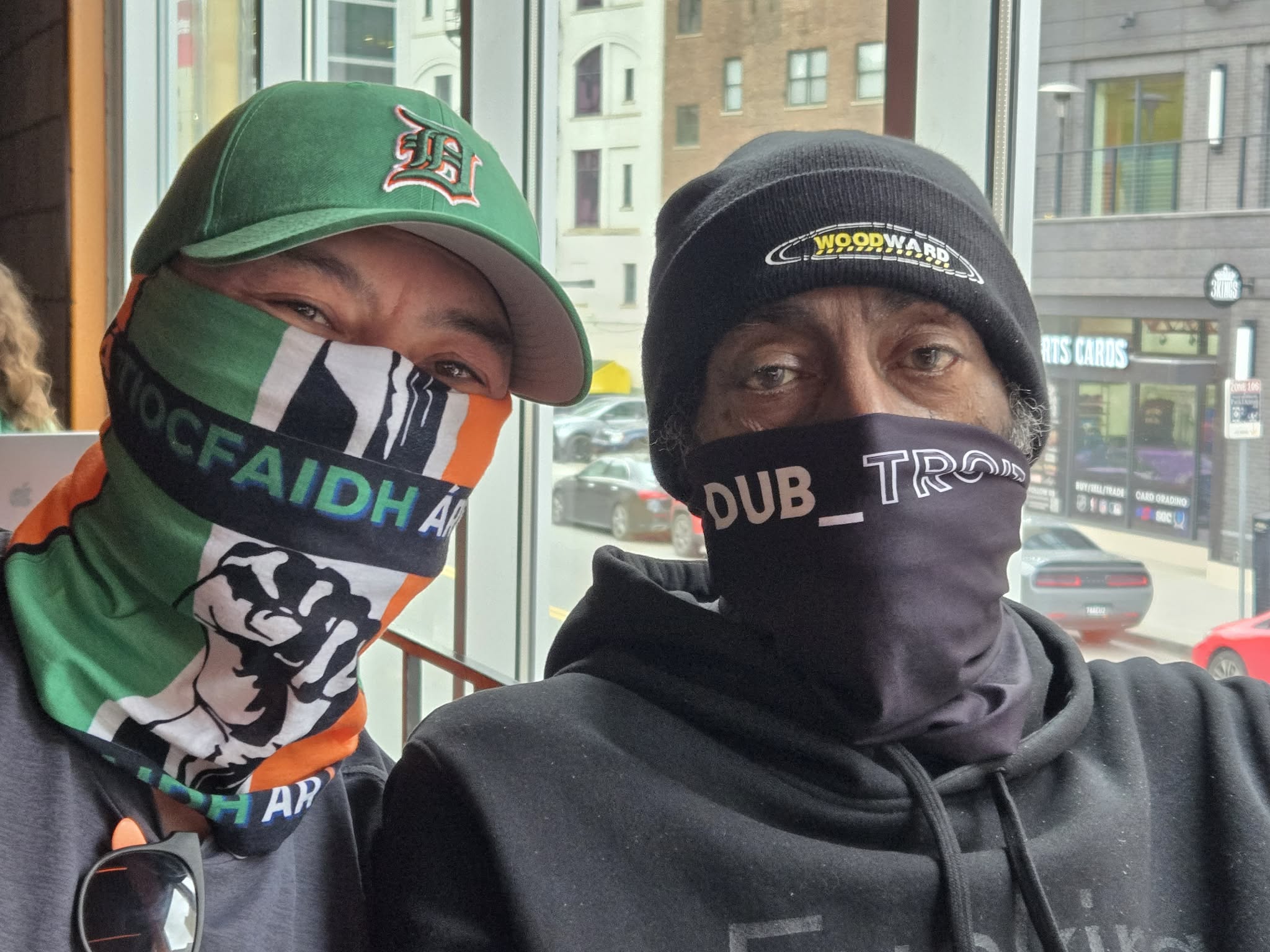
REOSC & The Don of Detroit
Mike Mannix: You can really hear the respect and emotional connection you already had with Detroit at that stage. So what eventually pushed you to stop admiring it from afar and actually take the leap over there on your own?
REOSC: Man, so, it first started when I released the first album. Yeah. I wanted to get some exposure and I felt, I need to get exposure in the right places.
So, I looked up, what’s hot over in Detroit and one of the main platforms that came up was 313.FM, our friend Brent and Jeffrey, Jeffrey Woodward. The Don.”
The Don of Detroit himself.
I sent, a demo to Brent saying, look, I’m in Ireland. This is the album I’ve made. I’ve also done a mix. Can I come on your show? And he’s like, yeah, that’d be cool.
He said we need a live video mix. So, I said, yeah, no problem. So, I set up the laptop here, set up a camera, did an all vinyl mix, sent it over, featured with none other than DJ Roach from Tec-troit. That was lucky. That was just pure luck that Roach was on the same show that night and Brent put me on the same show. But I was fortunate enough that Roach caught a good bit of my set.
Mike Mannix: That live set you did for 313FM is fucking fire man. In my top 10 mixes!!
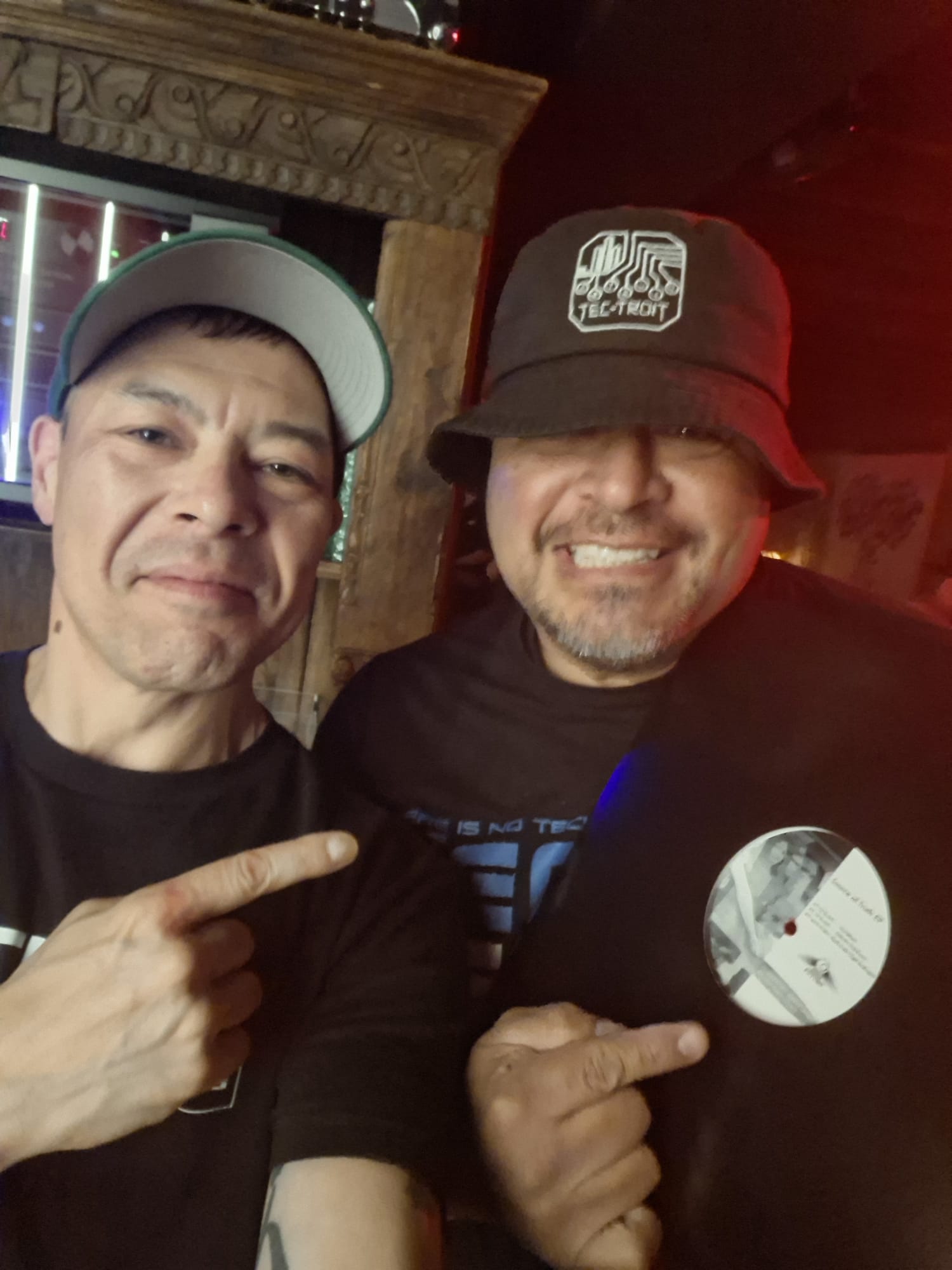
REOSC & DJ Roach Tec-Troit Detroit
REOSC: Nice one man, the guys were in Speaker Box. They were all listening to it there while I was on. And then Roach went on. So we stayed in touch. We did another show. I think that was maybe a couple of months later on 313.FM. And then
I got a message from DJ Roach. And he’s like, man, you’re a good DJ, man. And your tracks are, class. How about you coming to Detroit?”
And I’m like, really? He’s like, yeah. He goes, come over for Tec-troit.
Mike Mannix: Nice one man thats quality! Give us some background on Roach because he’s quite a significant figure in the Detroit scene and well respected globally.
REOSC: Roach is an Underground Resistance [UR] affiliate. He also has his own record label, Nuestro Futuro Records. But believe it or not, I didn’t find this out until I was at Tec-troit. Roach’s wife, Michelle, told me that
Rolando is Roach’s brother, aka The Aztec Mystic – Jaguar!
And I was like, oh, my God. So connecting the dots.
Roach, well, he’s a battle style, Detroit style vinyl DJ. That’s his background. Pure skill, taking wax out of the bag, slapping it on, cutting it straight in.”
And that really resonated with me. Like, we’re the same style, me and him.
And so we chatted, we had like, I got a message, actually, it was funny. I was just looking at the phone and then all of a sudden, ‘’Whaddup Doe?’’ And I’m like, this is before I went to Detroit. And I’m like, what the fuck is this? And it was Roach. And I’m like, oh, yeah, whaddup doe ? When you go over there, it’s a term of endearment. They are family they’re all solid.

Moses Malone & REOSC Tec-Troit Detroit
But, you know, we can’t forget to mention, when we talk about Roach and Tec-troit, I also like to talk about Moses. Moses Malone is one of their main guys again, similar style to myself and Roach.
So the Detroit style of DJing is completely different to what you have over here in Dublin, you know? It’s cutting, it’s scratching, and the decks are turned sideways. It’s fast paced.”
There’s no time to dance behind the decks.
Mike Mannix: Or throwing fucking shapes behind the decks.
REOSC: Exactly, if you look at Jeff Mills, the skill that he has. Pushing boundaries has always been a thing of Detroit DJs. And that’s a thing that’s kind of lost now in the wider scene. In my opinion, the DJ has been detached from the music. Like
when that technology does a lot of the work for you, you study the music less.”
I’ll give you an example. I play both. I play CDJs, I play vinyl. But when I’m doing a vinyl set, I need to study those tracks inside out. I can’t rely on the screen to say, OK, here’s the layout. Here’s when the layout is going to come out. I have to count all this in my head and know what’s coming. And then scratch it in at the right point, bring it in at the right point. And also, you’ll find in a recent mix that I’ve done with vinyl,
I like to mix tracks that have absolutely no beat. So we’ll just have the harmonics go and then I’ll take another track with a beat and I’ll throw that beat on to that other one.
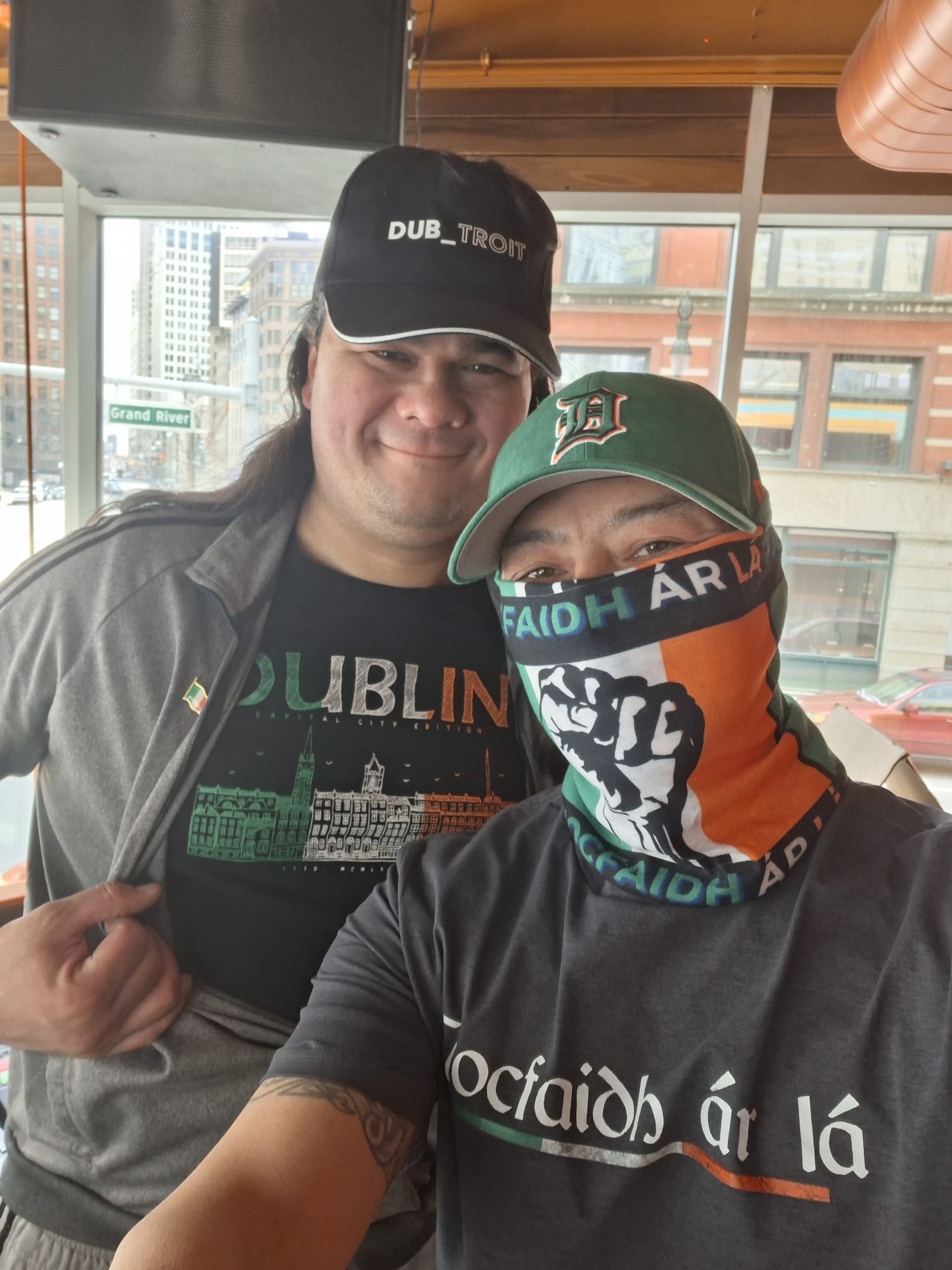
Brent 313 FM Detroit & REOSC
But then when the harmonics continue and then the beat actually kicks in on the first track, the two are going at the exact same time. So you’re basically kind of mixing nothing into a beat, if that makes sense. You’re forensically dissecting it all.
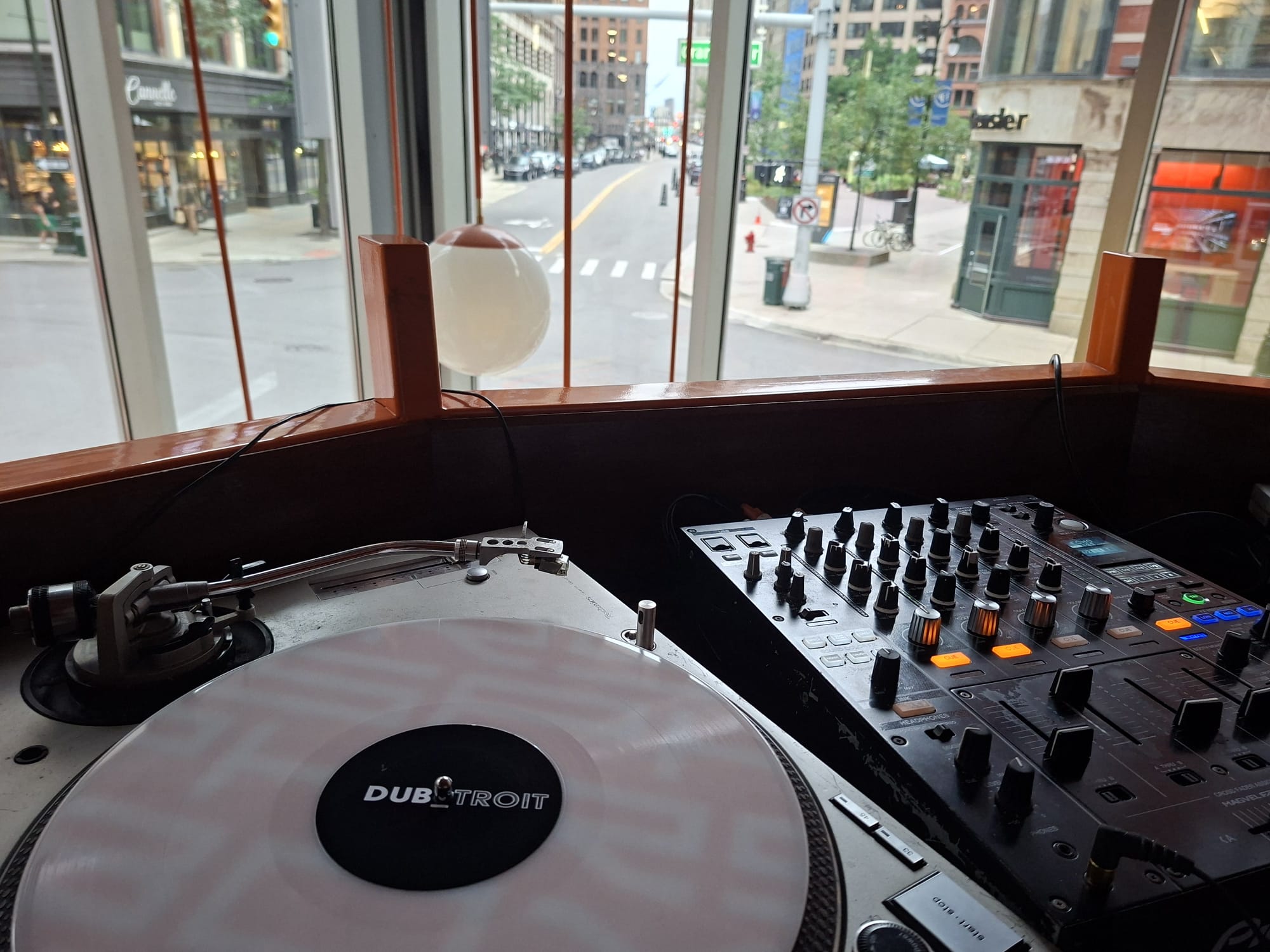
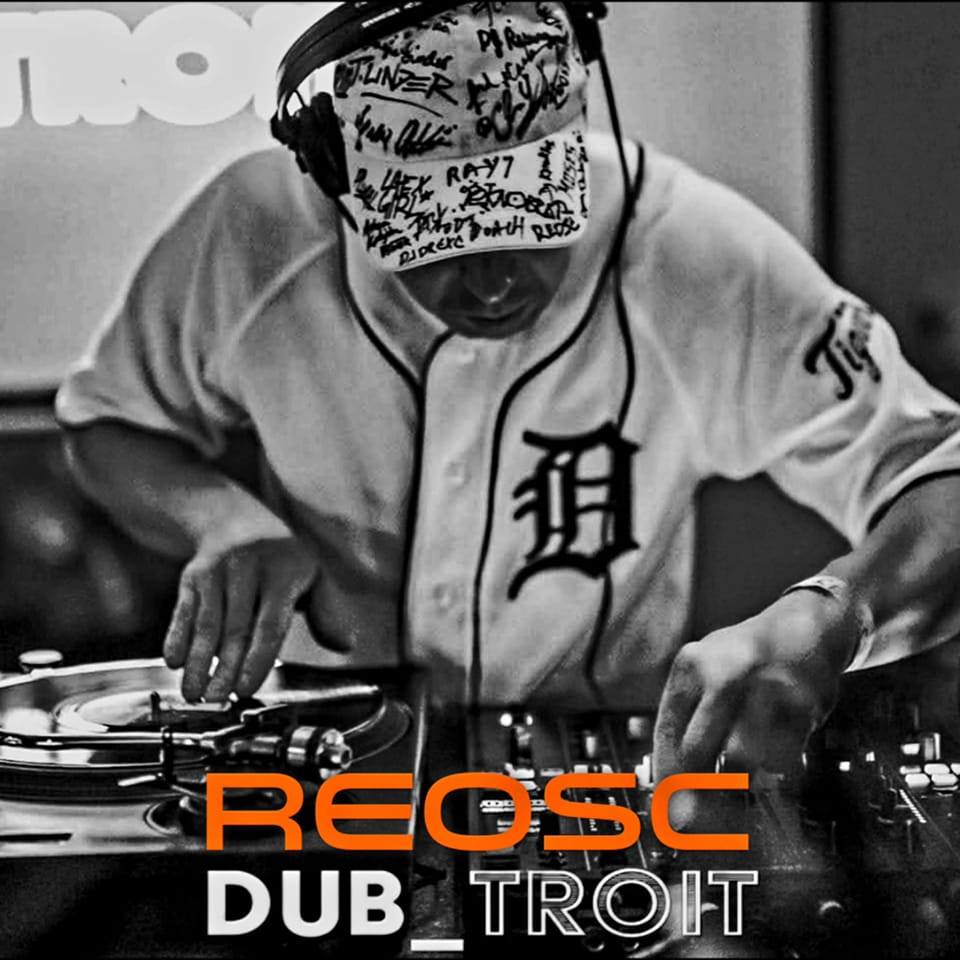
Dub_Troit vinyl 313FM Detroit
So, I made arrangements flew over to Detroit on my own, hooked up with Brent who runs 313.FM, and went to Tec-troit and it was the most phenomenal thing I have ever seen in my life since the Homelands Festival back here in Ireland in 98, 99, I think it was, that was another festival that really resonated with me. It took almost, what, 30 years to get something again, to really float my boat, because every single act was phenomenal.
And then the final act, you know, Depth Charge Experience, Underground Resistance, Dorian, Mark Flash and Mike Banks.”
While all this was happening, I was hanging out with my man Derrick Drivetrain, Soiree Records International, in Detroit embracing the scene.
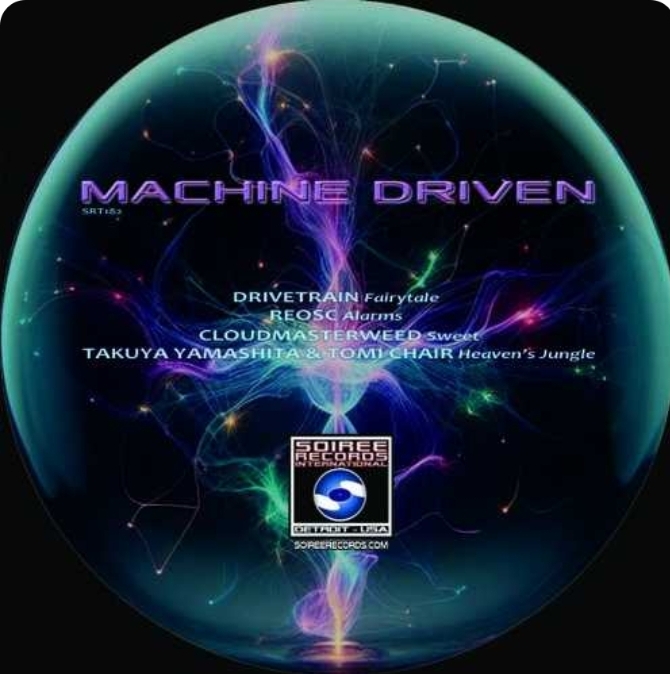
Machine Driven EP Soiree International Records
Part of my Journey was to get the approval with my music from Detroit, I met Drivetrain the first year, he became like my bigger brother and mentor, he made my dream come true, to release on wax. In my opinion hes a Detroit Originator and one of the best in the world!”
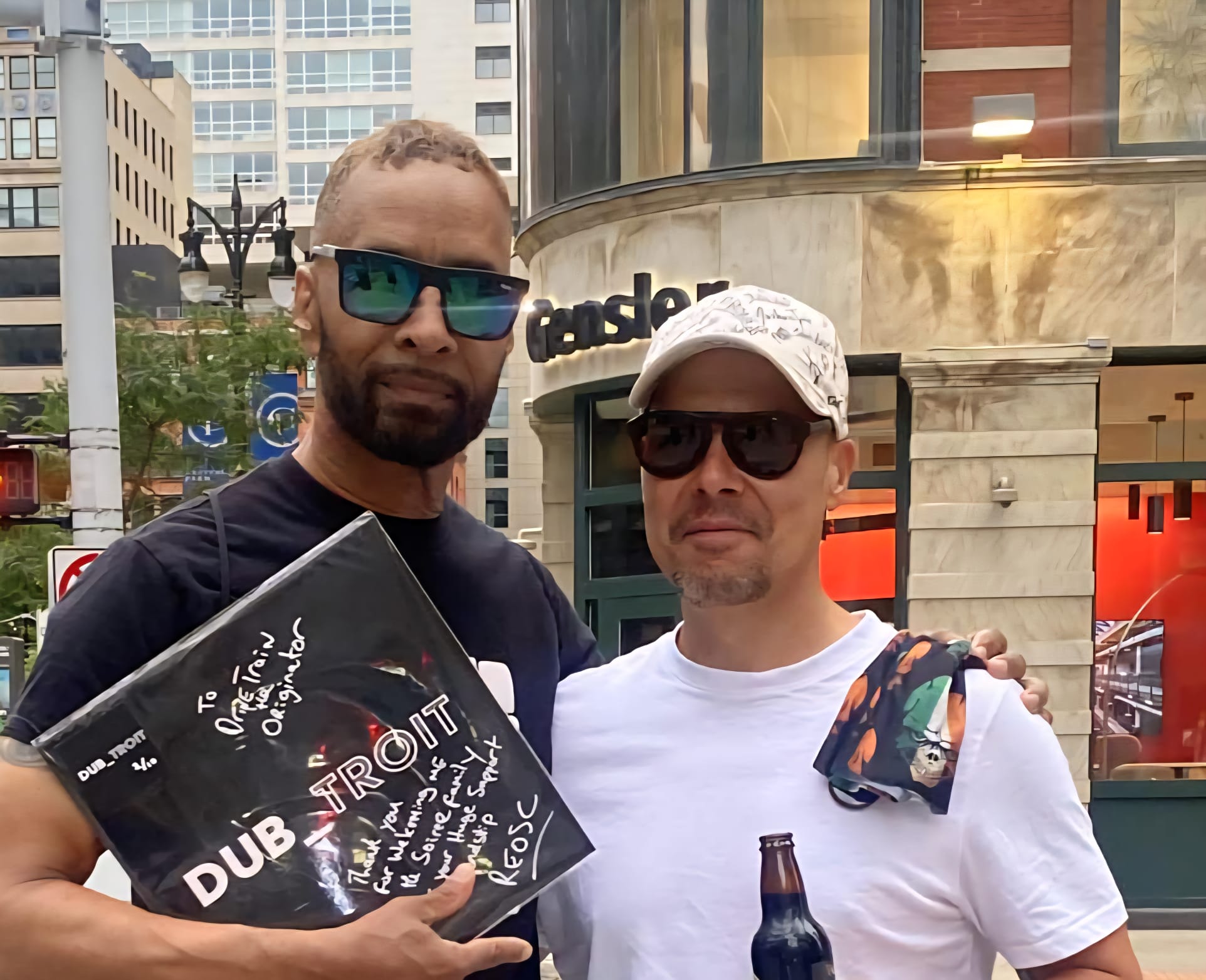
Derrick Drivetrain & REOSC Detroit
Since then, I’ve worked with a lot of those guys, and those guys have heard me DJ, they’ve heard my productions, and they fucking love me, man.
For me, I’ve accomplished all I’ve needed to accomplish now. You have guys like, Bill and Tom and Jason of Detroit Techno Militia, Thomas Barnett it’s just amazing the support, even Claude Young, Los Hermanos, all the fucking heavyweights, man! Mike Banks even took one of my own records!
I can’t believe the support they give me, like if I was to give up tomorrow, which I’m never going to give up now, because those guys keep pushing me to keep going and going. You can’t quit either, you can’t quit.
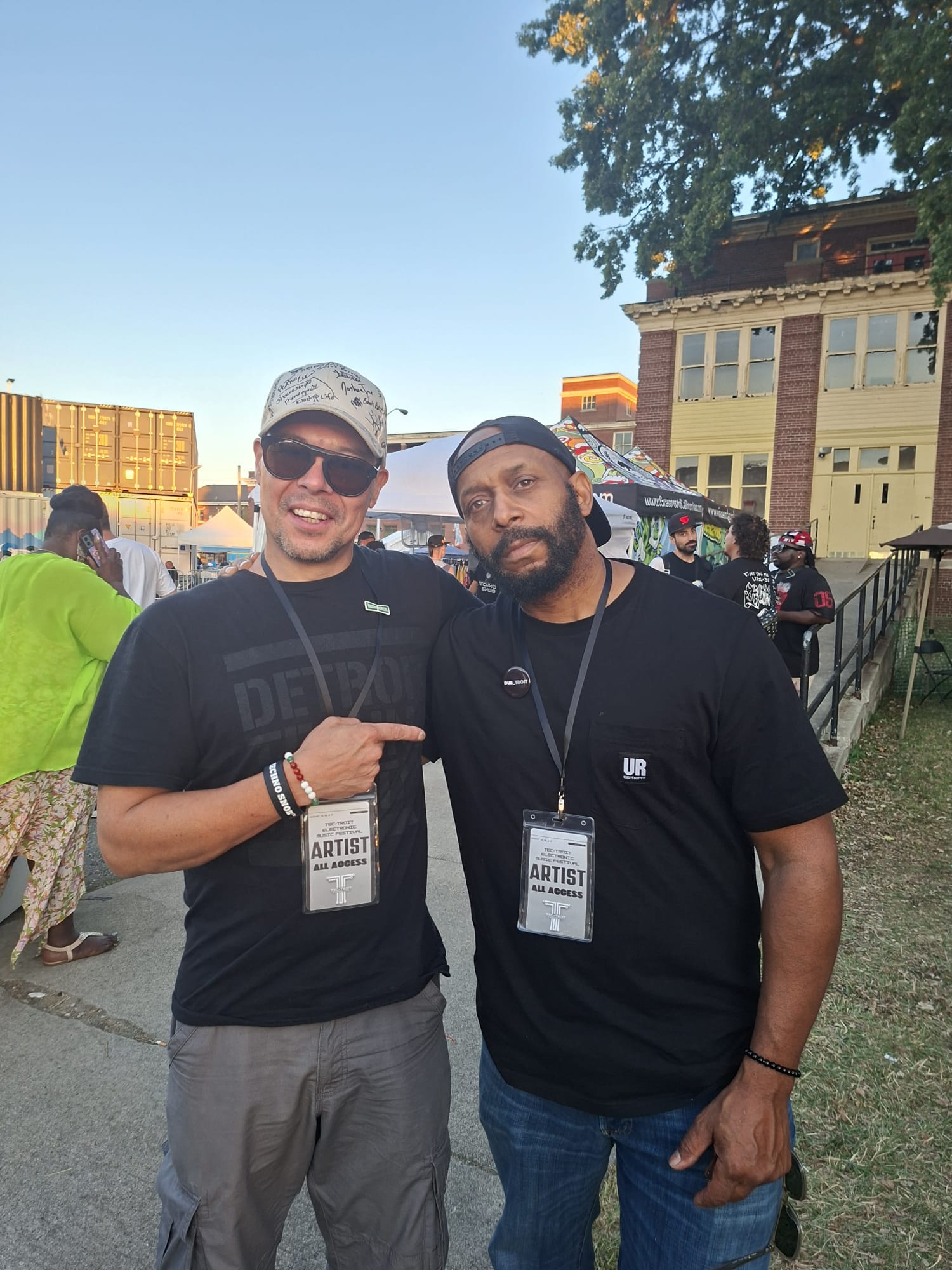
REOSC & Dorian Underground Resistance UR Detroit
Tec-Troit wasn’t just another festival for REOSC—it was a homecoming of sorts. His connection with Detroit, a city that embodies the soul of techno, added new layers to his artistry. The scene’s openness and communal spirit reaffirmed his dedication to music as a global language and provided a sense of belonging that transcended borders. This pivotal moment not only validated his efforts but also reinvigorated his creative energy.
Dub-Troit Dublin
The Birth of Dub-Troit: Bridging Two Worlds
Mike Mannix: That love and respect that you’ve received in Detroit, seems like a million miles away from any kind of support that you might not have got in Dublin, it’s kind of inspired this whole new brand that you were bringing out as well, the Dub-Troit thing. It’s led to that, hasn’t it?
RESOC: Yeah, yeah. So Dub-Troit came when I came back from Detroit. I was like, right now, this is my family over here, these Detroiters. I’m from Dublin, they’re from Detroit, and so I called my new brand Dub-Troit.
“Dub-Troit is more than a brand; it’s a mind-set. It’s about respecting the roots of techno while pushing boundaries, just like the Detroit legends taught me.“
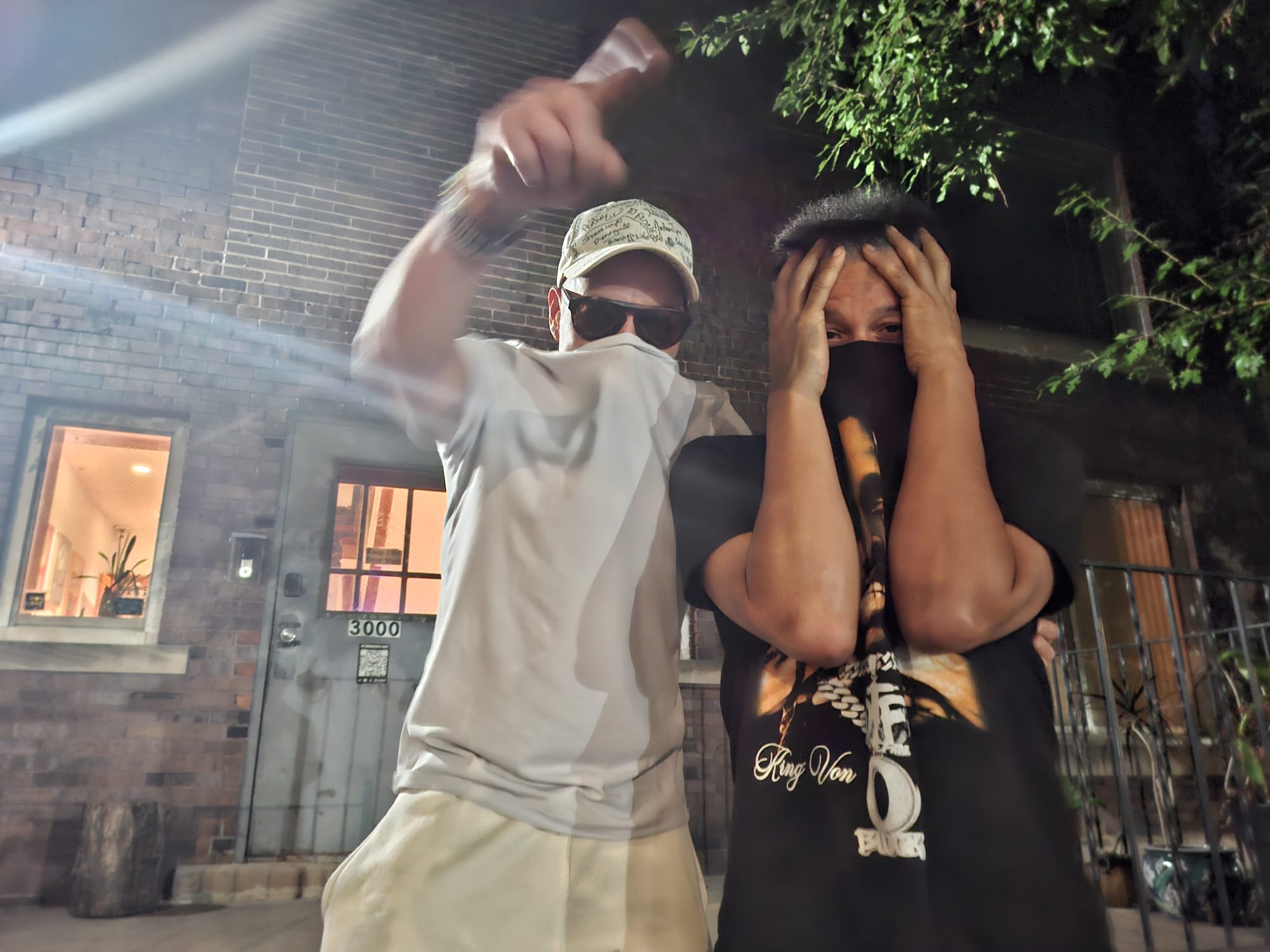
REOSC & Moodyman outside Submerge 3000 HQ Detroit
I wanted to honour the connection I felt with the city. Dublin is my home, and Detroit is now like a second home,
it’s a bridge between the two cities, celebrating their raw energy and shared love for techno.”
Dub-Troit represents the culmination of REOSC’s journey — a fusion of his Dublin roots and the Detroit influences that have shaped both his sound and philosophy. More than simply a music project or brand, Dub-Troit has evolved into a cultural exchange that honours techno’s origins while continuing to push its boundaries forward. At its core, it reflects what techno has always stood for: connection, evolution, community, and shared expression.
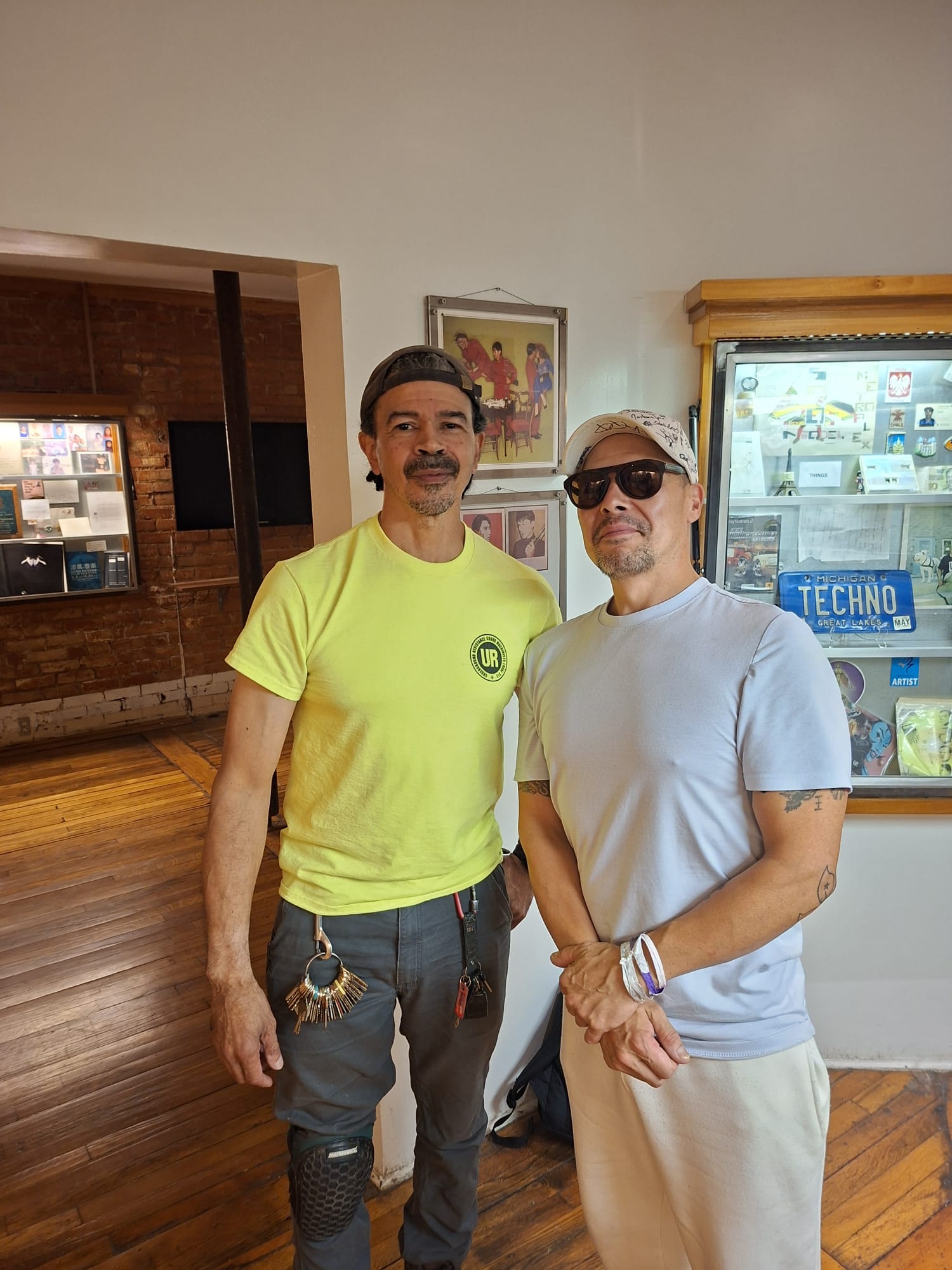
Mike Banks UR Underground Resistance Detroit & REOSC
Looking back from 2026, it’s clear that 2025 became the defining chapter in REOSC’s evolution — the year where years of dedication to underground techno culture transformed into something far greater than music alone. What began as a personal pilgrimage to Detroit ultimately became the foundation of Dub-Troit: a movement connecting Dublin and Detroit through authenticity, vinyl culture, and a shared underground ethos.
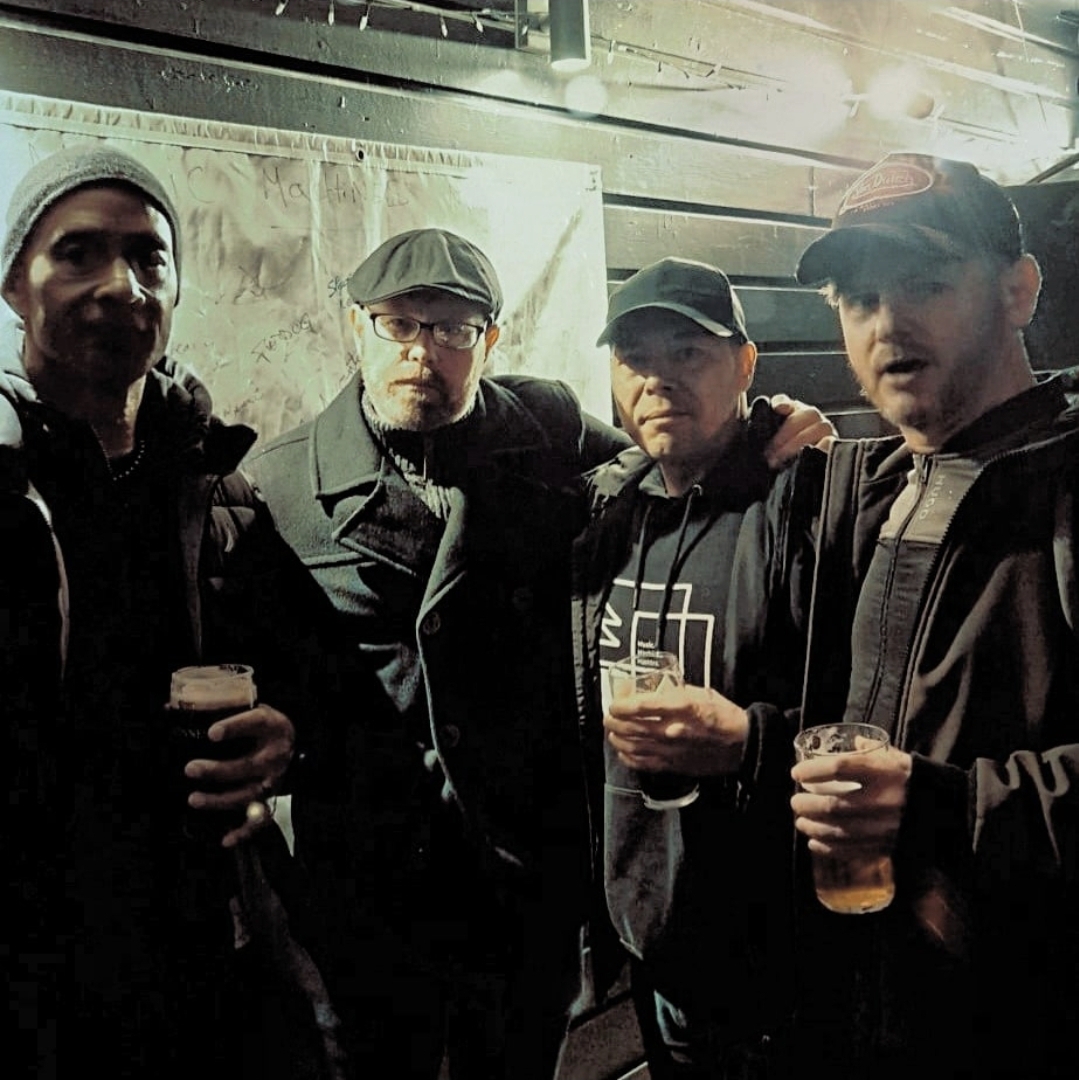
Drivetrain, Moses, REOSC, Mike Moggi Mannix IUM Magazine Dublin
Throughout 2025, REOSC became increasingly embraced by respected figures within Detroit’s techno and electro communities. His performances, productions, and technical vinyl skills earned recognition from artists deeply connected to the city’s musical roots and legacy.
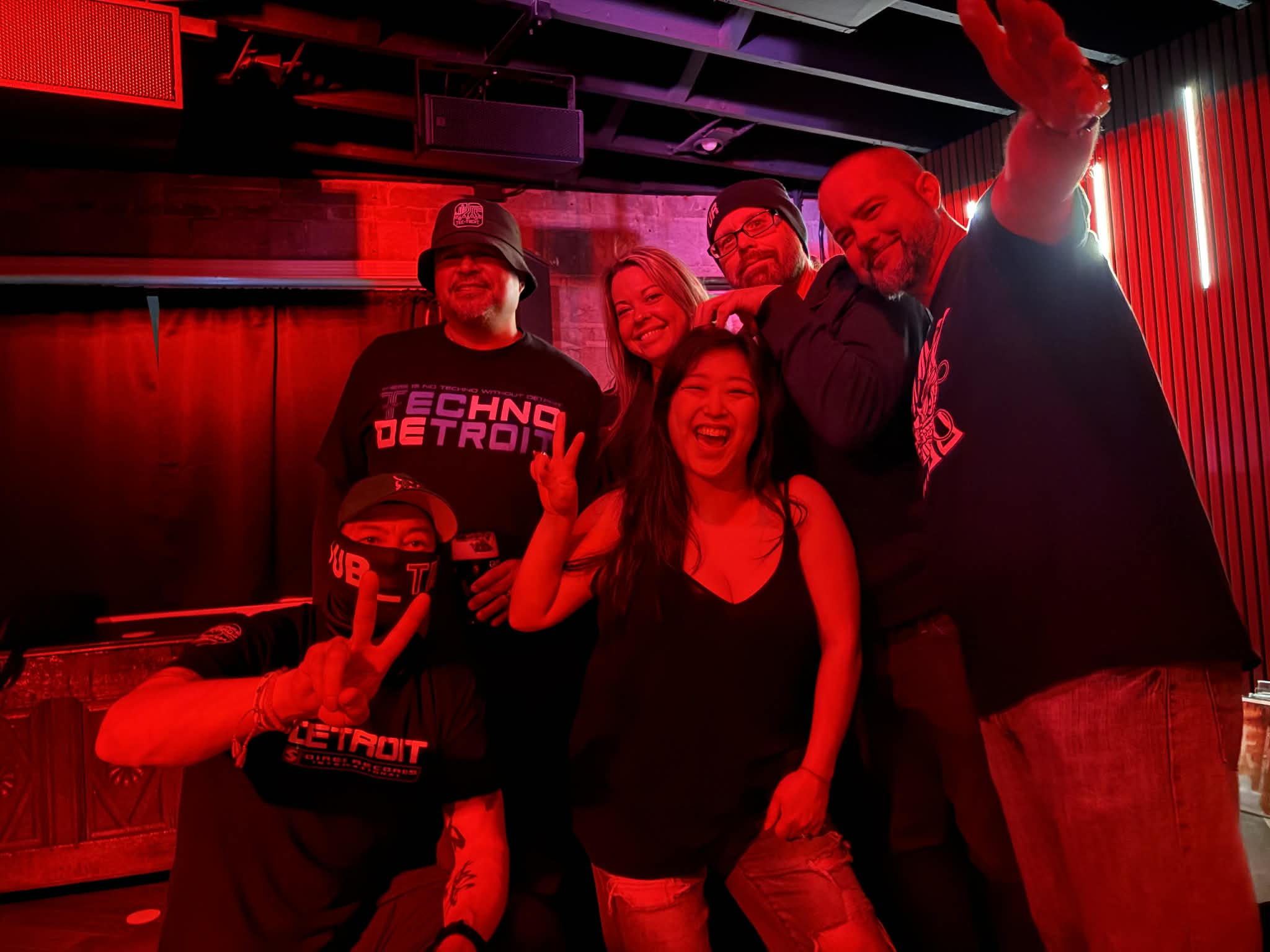
Detroit Crew & REOSC
One of the defining moments came during Tec-Troit 2025, where REOSC performed at Detroit’s legendary Marble Bar as part of the Underground Resistance-presented Wave Jumpers showcase — a landmark event celebrating the continuing Drexciyan legacy through Tyree Stinson, M Johnson, Blake Baxter, Moses, Biblical Proportion, which marked another major milestone in REOSC’s growing Detroit journey.
Reflecting on his deepening relationship with the city, REOSC explained:
“To be the best at a style of music that you want to study, you’ve got to first learn the grassroots by going where it was first made.”
Throughout the year, he continued strengthening ties across Detroit’s underground network. He appeared on 313.FM, performed in Ypsilanti alongside Prophet Ecks and Silent Echo at Fallout Shelter, and continued collaborating with artists, DJs, labels, and radio stations connected to the deeper roots of techno culture.
2025 also saw the launch of the Dub-Troit Radio Show on Ireland’s Phever TV and Radio — Ireland’s first fully Detroit-dedicated radio show focused entirely on Detroit house, electro, and techno. Hosted alongside Elaine and Declan of the Music Machines Masters crew, the show became another extension of REOSC’s mission to bridge both cities through music and culture.
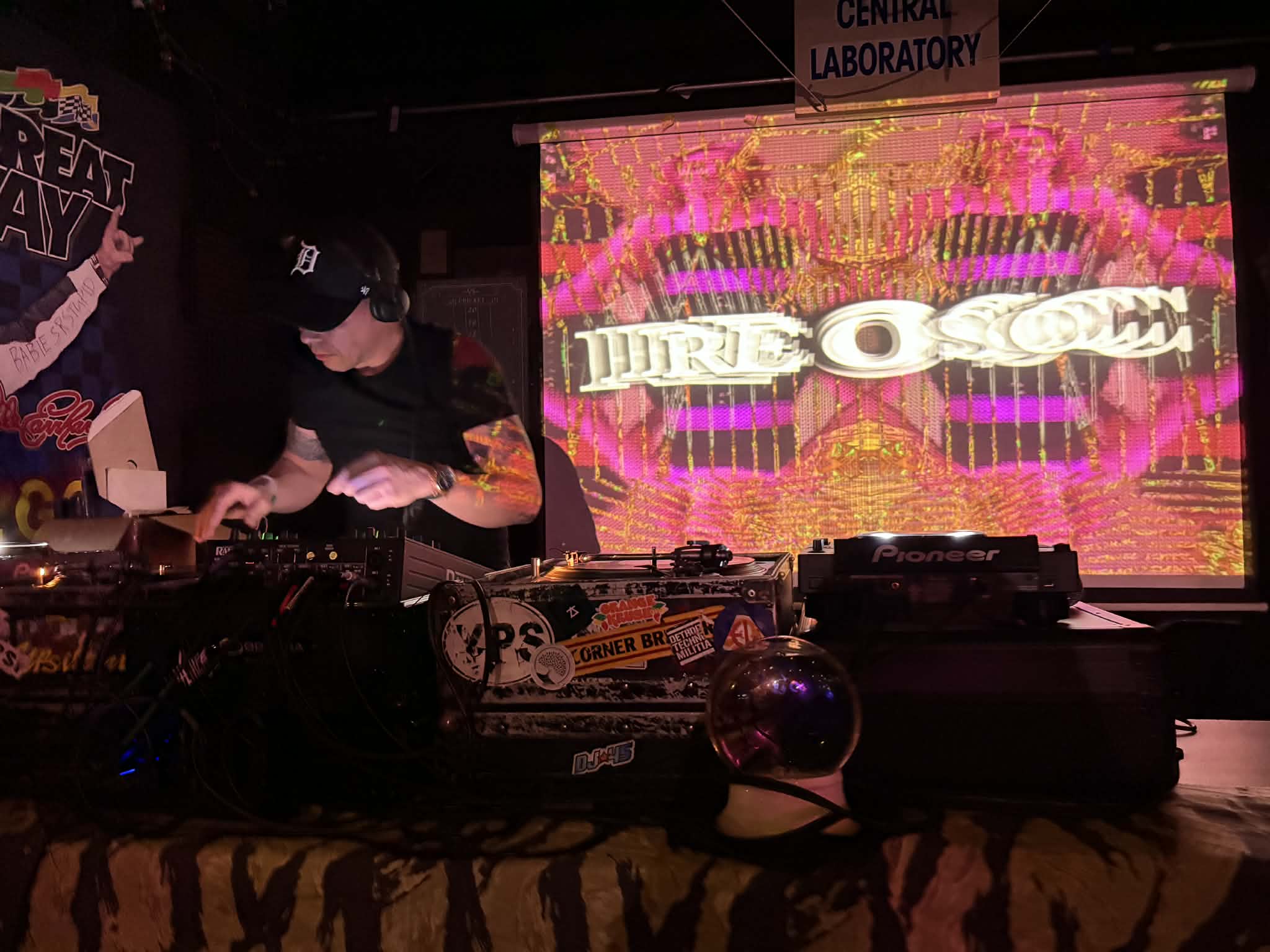
REOSC @ The Fallout Shelter YSPI ILANTI Detroit
Musically, REOSC released his New Beginnings EP on Sonar Bliss Records, featuring a remix from Irish act Haindo, while continuing to travel between Ireland and Detroit carrying unreleased demos and building future opportunities.
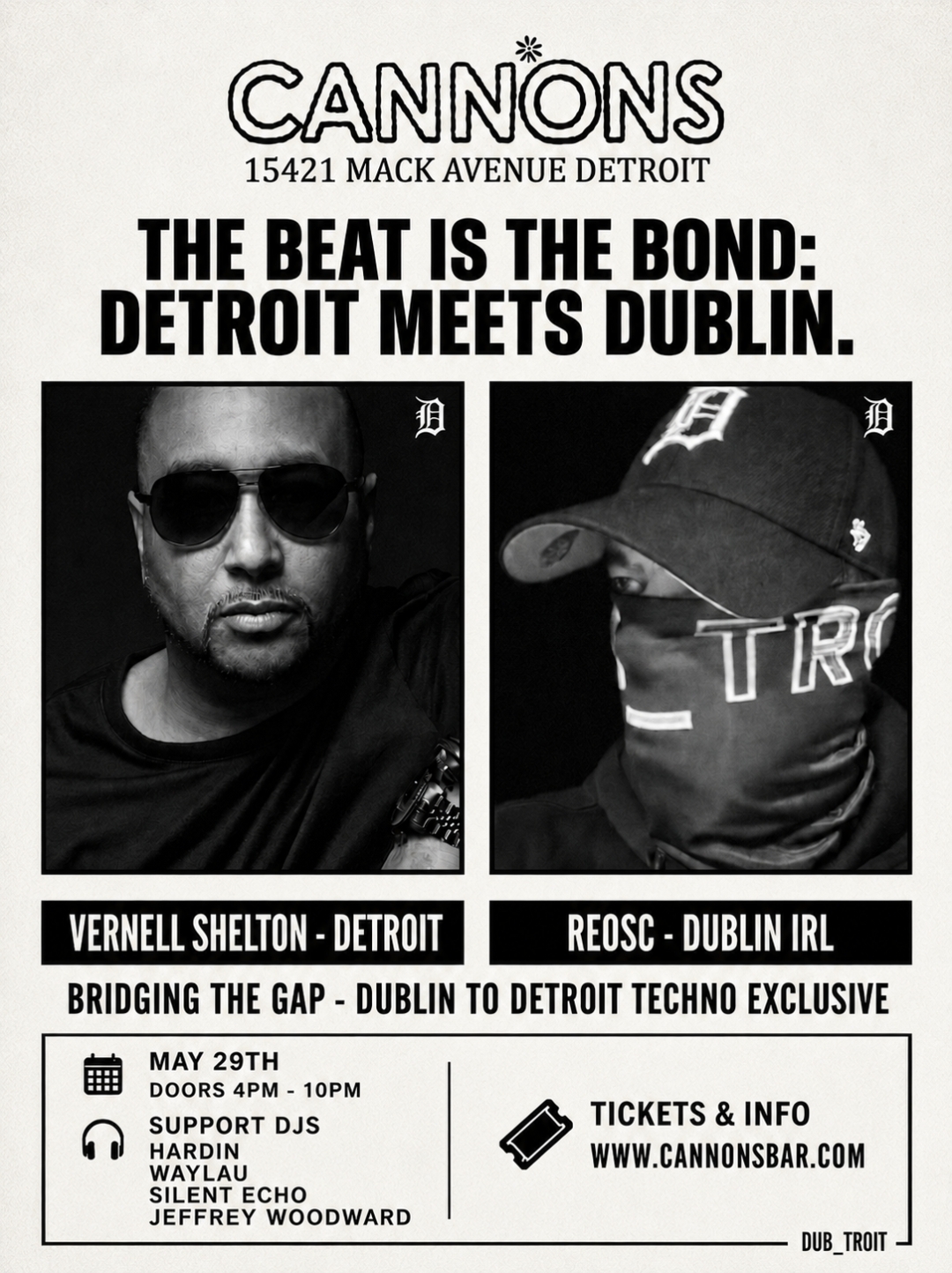
Vernell Shelton former Scan 7 member Separate Minds & REOSC Detroit
The momentum carried strongly into 2026. REOSC returned to Detroit during St. Patrick’s Week, performing at multiple events across the city where he shows his appreciation
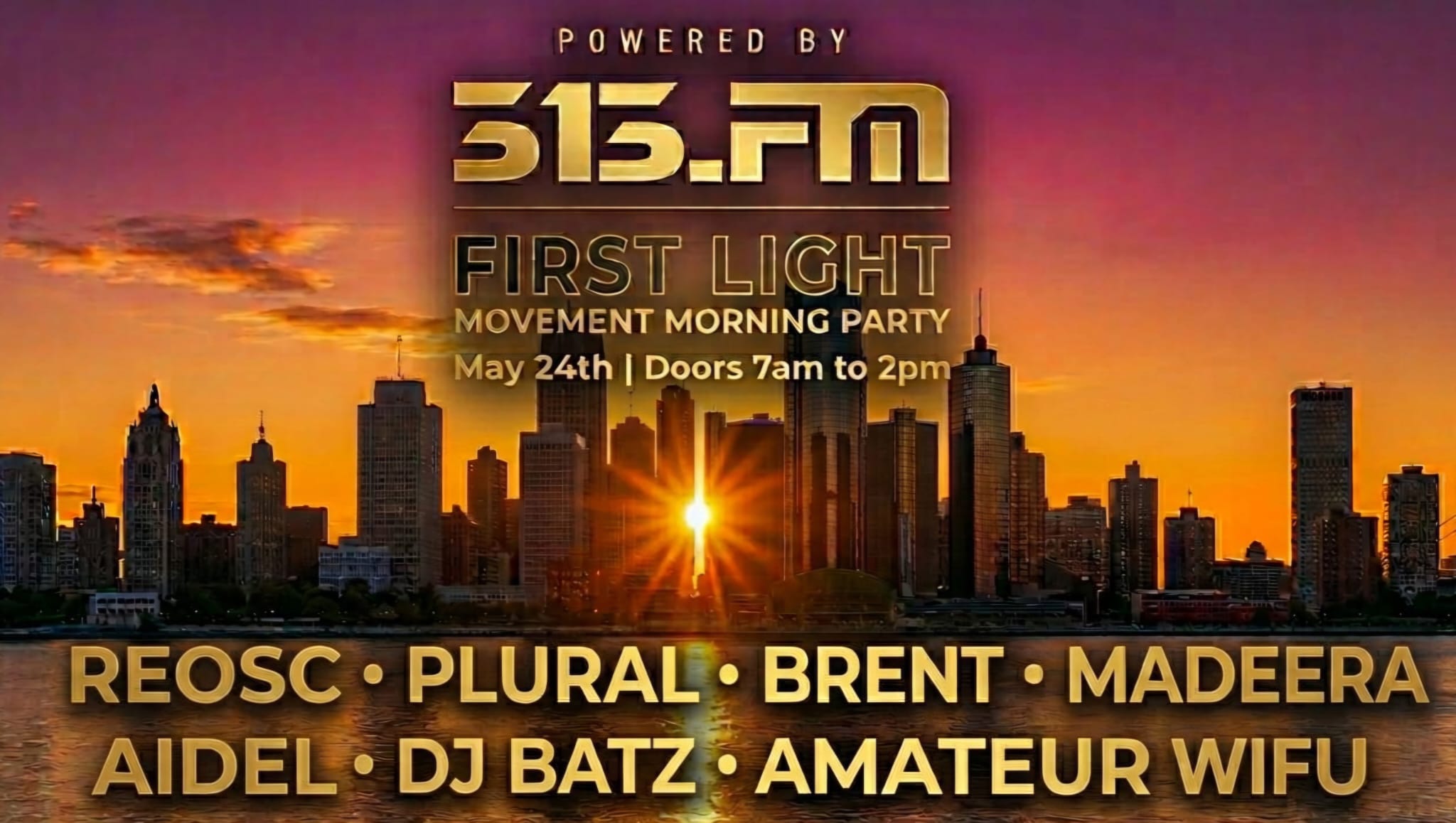
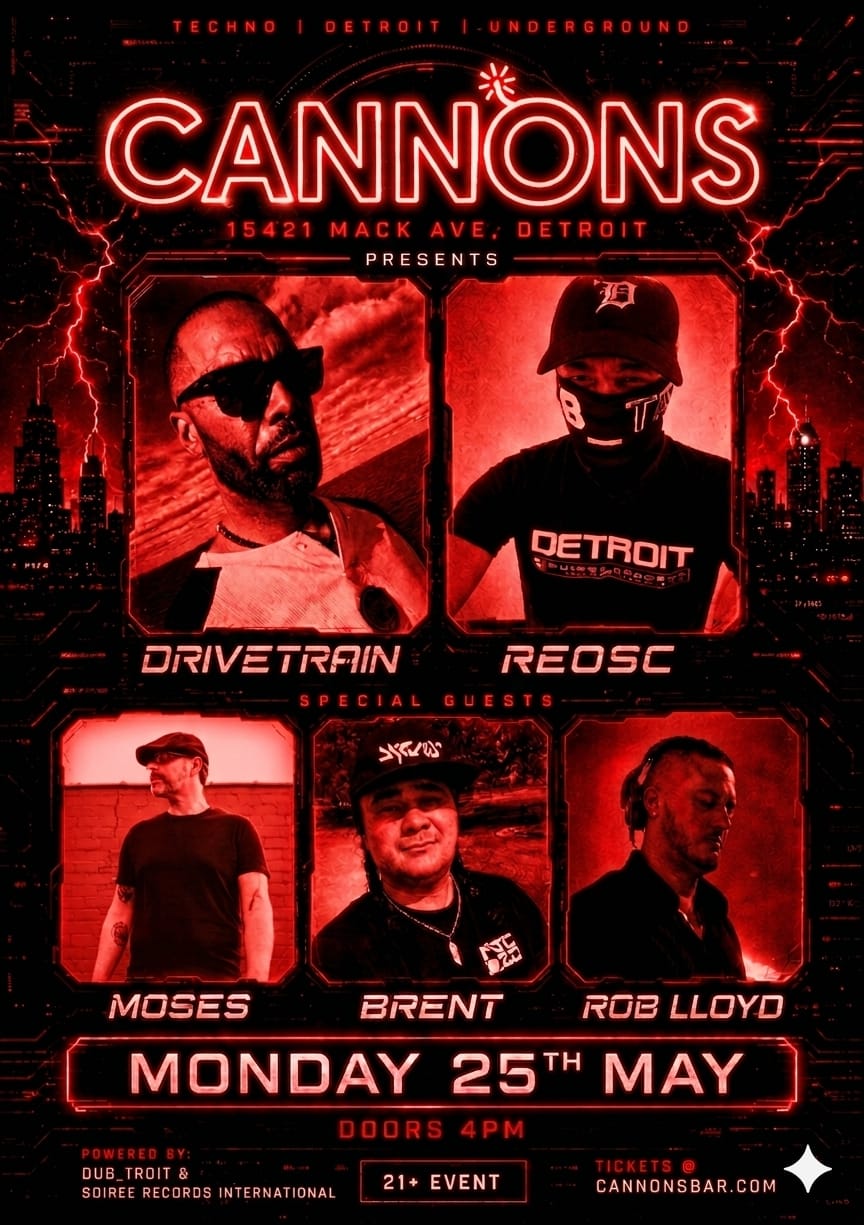
”thanks to DJ Krazy and Heather from Connected Detroit for a brilliant St Patricks day, Cannons in Detroit, Danny, Jamison and crew at the Regal Beagle in Yspi, Bill at Bang Tech 12 for my last release and booking for this awesome event in May, Brent and the Don at 313FM, Roach and Moses at Tectroit & anyone and everyone who I’ve met and has been apart of this incredible 3 year journey thanks so much, I send you all love, last but not least my Brother Derrick DriveTrain for my first release on wax Machine Driven EP Soiree International Records and for believening me and my music too”
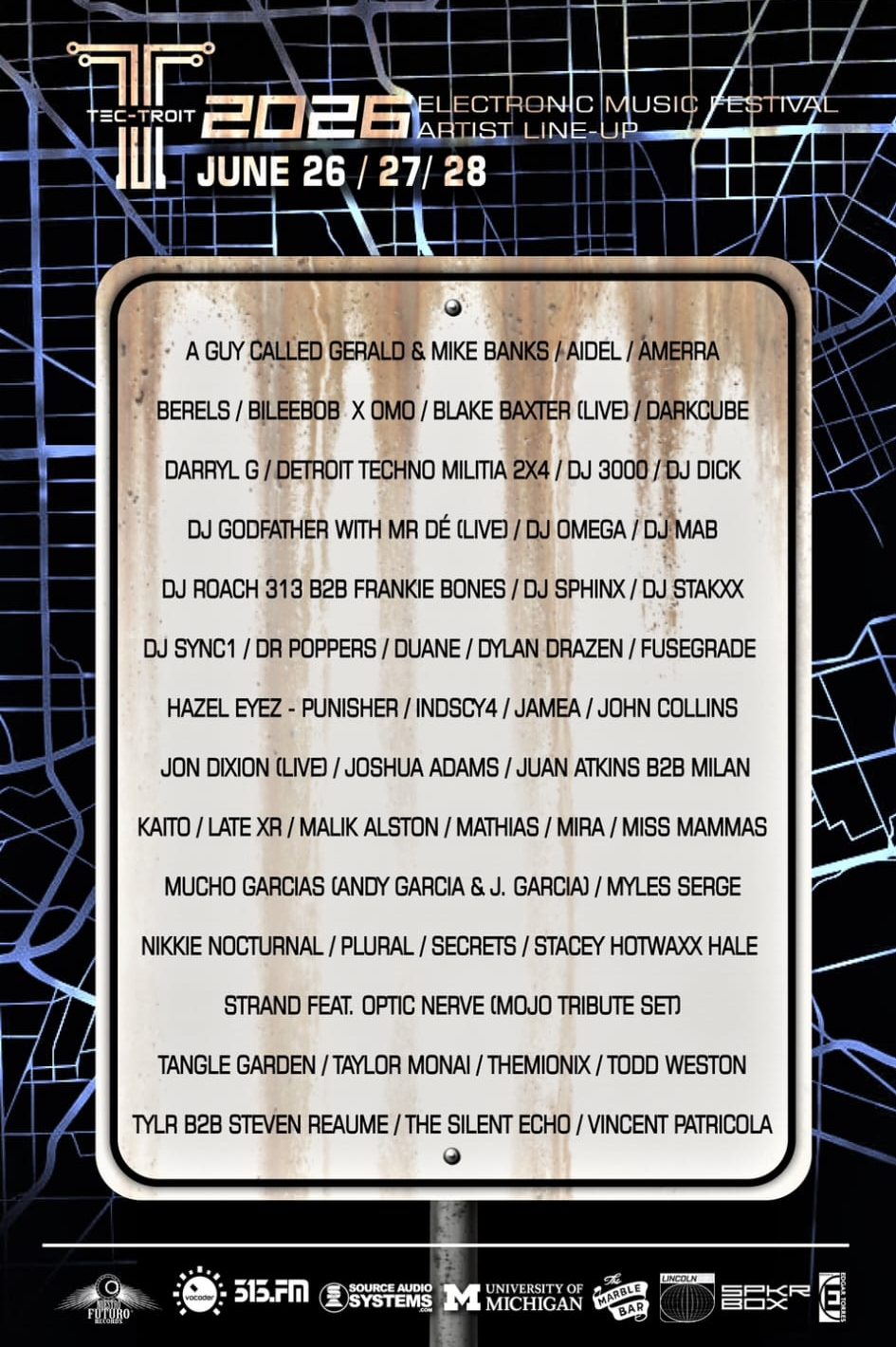
while further cementing his place within the underground community. He is also scheduled to return again at the end of May for another run of performances leading into the Tec-Troit Techno Festival in June 2026.
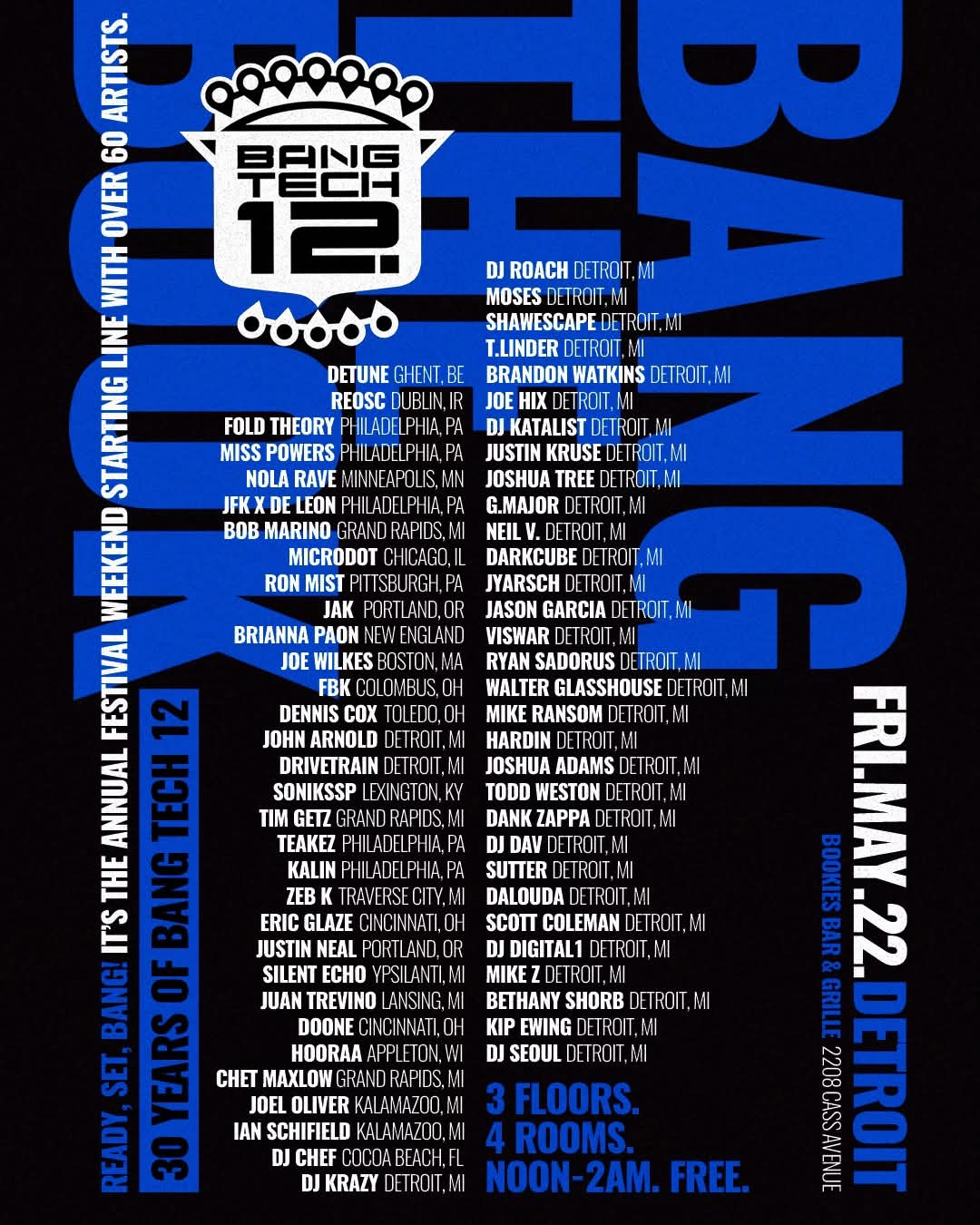
For REOSC, however, the deeper impact of Detroit went far beyond performances or releases. The city fundamentally reshaped his outlook on music, culture, and community.
“Once you go to Detroit, you learn the origins, you meet the best in the business and you know you cannot quit”
That philosophy now sits firmly at the heart of Dub-Troit — a concept built on loyalty, respect, and a refusal to disconnect from the culture that inspired him.
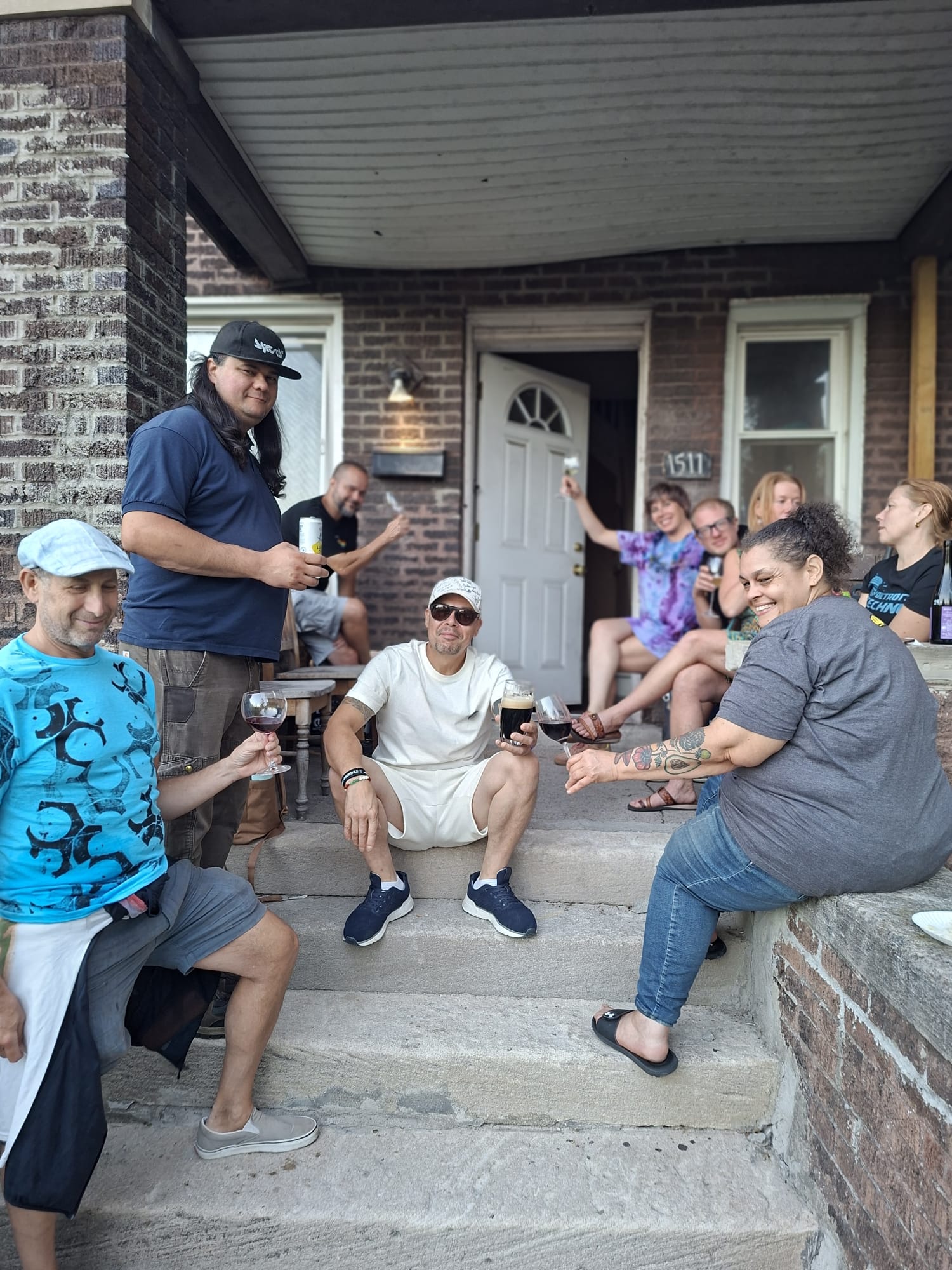
Detroit Crew & REOSC
As he reflected during the interview:
“I’ve been vetted and tested by some of the best in Detroit and Chicago… they know my heart stays loyal and locked to the sounds of Detroit techno.”
Perhaps the quote that best defines REOSC’s journey came when speaking about the city itself:
“It’s the strongest community of music you will ever find in any city in the world.”
By the end of 2025 and into 2026, Dub-Troit was no longer simply a slogan or concept — it had evolved into a genuine cultural bridge between Dublin and Detroit, built on vinyl, underground resistance, community, and an uncompromising dedication to the true spirit of techno.
In the process, REOSC achieved something no other Irish DJ has before him: genuine acceptance and recognition from the heart of Detroit’s underground techno community itself.